Monday, March 19, 2007

MOVIE REVIEW: The Host


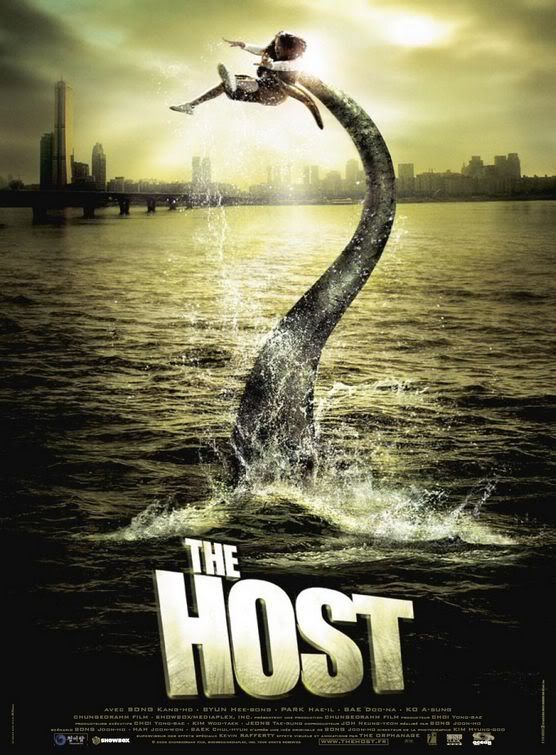
Soon after the strange creature rises from the Han River, making its first appearance in The Host, a monster movie from Korea, the title of the movie becomes clear: the creature is the host of a possible virus that threatens the populace of South Korea. But soon, the title also applies to the bumbling hero, Gang-Du, who was sprayed in the face with some of the creature’s blood and could also be hosting the virus and, as a result, is poked and prodded and treated like chattel by the authorities. Then as the film unfolds further, the host of the virus may very well be those authorities - the American military presence that still exists since the 1950’s in South Korea. After all, it was a US Military official who orders toxic chemicals are poured into the Han River, which, 6 years later, results in this monster. Then, the US sends in the CDC to help with the possible problem of the virus while also making a hero of a US serviceman who succumbs to the virus. And they may or may not be holding back some pertinent facts.

Unlike classic monster movies – like, for example, one of my all-time favorites Them - where the government and military are the heroes protecting the people from the otherworldly threat, in The Host this same intervention creates miscommunication and bureaucracy. The suspicion and cynicism directed at the military is a reflection of the current time. Here we have the authorities acting as they wish against a creature they don’t attempt to understand. The face-off climaxes with the release of a weapon to fight the creature among protests by citizens uncertain and suspicious of the way events are being handled.

Working their way through all this is the Park family. Hyun-seo, daughter of Gang-Du, is last seen wrapped in the tail of the amphibious monster that disappears under the river. The family has reason to believe that she is still alive, trapped beneath the river in a sewer. Because the authorities won’t help, the family - Gang-Du’s father, Hie-bong, the owner of a foodstand where Gang-Du also works; his brother, Nam-il, a disillusioned college graduate and current ne'er-do-well; and his sister Nam-Joo, an accomplished archer - band together to rescue Hyun-seo. The family’s quest against both the government and the monster creates a tension from which humor (many times uncomfortably hilarious slapstick scenes), warmth, and, of course, the usual family dysfunction exist.

As for the monster part of this monster movie, The Host doesn’t rely on quick editing to manufacture scares. Nor does it pile on the gore. Two of the best scenes in The Host represent a tour-de-force of directing by Joon-ho Bong. He leaves the action off-screen long enough to fool the audience into thinking one thing happens only to reveal that another has. By slowly unfolding the scenes - each one represents only a few seconds of time - and allowing us to breath a sigh of relief makes the revelation of the true terrible reality to resonate all the more.

The crowd I saw The Host with reacted the same way to both these scenes – gasps of surprise then a slow murmur of “oh no” buzzed throughout the theatre – which only drives home the humanism that Joon interjects into the movie. Sure, it’s a big monster from the river, but what the monster’s rampage tells us about our own dealings with family and society is where the real movie magic happens.

Monday, February 19, 2007

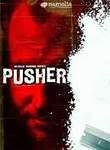
DVD REVIEW: Pusher


From Denmark and made in 1996 (the first part of the eventual Pusher Trilogy), Pusher explores a week in the life of a small-time drug dealer who tries to solve his money problems by getting in over his head on a big score. It balances the ordinariness of the everyday with gritty street life existence and does so convincingly.

Frank seems to be eking out a meager existence as a dealer. He pals around with his friend Tonny and is involved romantically with Vic, a dancer. When an old jail acquaintance comes to him with a sure thing, Frank goes into hock with even further with Milo, the local bigwig. In between he stays out late, parties, and has inane conversations with Tonny about sex and women.

As Frank’s dilemma builds the mood of the movie becomes more frantic. His brooding personality turns to distraction as he attempts to collect money form the various losers that owe him. Soon, of course, this all catches up to him. The movie is at once grim with cloudy, damp, cold Denmark as a backdrop, as well as human. Frank becomes not an anti-hero of cool as portrayed in many modern films that feature such characters, but a well-rounded and deftly conceived character that makes poor decisions to correct bad ones.

There are some heart-pounding scenes of power by director Nicolas Winding Refn – Frank running through the streets shown from a longview from the sidewalk with the police in pursuit and when Frank at his wit’s end tries to collect money from a hapless and scared junkie. The script tells it story without the flair for the melodramatic and/or grandiose exclamation point that spoils many of the genre’s endings. Instead, the finality and ambiguity of ending simply adds a period to the final shot to make all that leads up to it all the more remarkable.

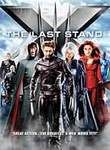
DVD REVIEW: X-Men 3: The Last Stand


A mish-mash of a movie that is clumsy and shallow and an altogether poor follow-up to the previous two X-Men movies, X-Men 3: The Last Stand is disappointing mostly because of the potential that it wastes. The previous installments directed by Bryan Singer, provide much fertile ground for this story to take seed, yet it uses narrative as distraction between action scenes and doesn’t try to drill for the depths that seems to come naturally for other comic book movies (Spiderman for instance).

The story is about a mutant who is able to take powers away from other movies and the pharmaceutical company that exploits this child’s power to create a “cure” for all mutants. The allegory that exists between this and the search for the “gay gene” in our contemporary times is unexplored. The head of the drug company moves ahead with this because his son is a mutant with big feathery wings sprouting from his back. Fans of the X-Men comic book will be sorely disappointed to see how underdeveloped the character of Angel is. To say he’s a plot device to make a point about the kindness in those poor misunderstood mutant hearts is an understatement. The use of Angel and his relationship with his father is contrived, silly, and laughably resolved.

There’s also incoherence to the scenes. Wolverine murderously slices his way through Magneto’s guards outside of a forest retreat. That’s it. Nothing more happens. Just an excuse to have Wolverine go on a killing rampage. There are a few surprises but these are shoehorned in between such drivel that their dramatic effect is negated. The fate of Wolverine’s love for Jean Grey is ham-handedly foreshadowed that one waits with impatience for it to happen if only so that this ordeal of a movie can end.

Sunday, February 18, 2007

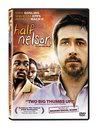
DVD REVIEW: Half Nelson


Half Nelson concerns itself with a middle-school teacher with a drug habit, the student who discovers him smoking crack in the gym locker room, and the complicated relationship that ensues between the two. Its strongest point is the straightforward way that Dan Dunne’s, the teacher, and Drea’s, the student, concern for each other affect the unfolding of the story. Drea’s back-story – her imprisoned brother and her surrogate father, who is also a drug-dealer – are known to the audience but are kept from Dan. How this lack of knowledge affects the way Dan approaches Drea’s wellbeing is superbly illustrated.

Though the movie does lag a bit after the initial set-up and takes, perhaps, too long to reach its end, it’s anchored by the performances. Ryan Gosling is understated as the teacher. He reaches not for pathos but achieves sympathy for exacting the line between his own tormented actions and his need to do well in the classroom. Shareeka Epps as Drea shows a determined yet vulnerable strength as she struggles to understand her teacher’s weaknesses, her mother’s absence due to working double shifts and Frank’s, the local drug dealer, kindness and generosity.

The movie becomes episodic in its middle part – and a few of these represent the heart of the movie: Dan runs into a father of a former student at a bar and Drea visits her brother in prison. Early in the film, Dan tells an acquaintance that he just wants to reach one student and that’s all. These scenes heart-wrenchingly display the yawning divide that all teachers must navigate: their own failings and the complex tug of the world outside of the classroom.

Saturday, February 10, 2007

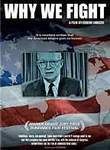
DVD REVIEW: Why We Fight


Why We Fight looks at the motivation of the current Iraq War by documenting the half-century of the growing “military-industrial complex.” Lucidly and forthrightly presenting the business and political needs for war, this documentary powerfully explains the current imperial folly our country has undertaken and the institutions in place that allows it to do so. As one speaker explains it, the idea of war – and the businesses that manufacture the weapons, the armed forces that spend the money to buy those weapons, the think tanks that write policy supporting the use of those weapons, and the politicians that protect the weapons-makers - is so embedded in the fabric of our foreign policy that it is invisible. For example, while as Secretary of Defense under President George H.W. Bush, Dick Cheney saw a proposal for the army to outsource its service programs to private concerns. Later as CEO of Halliburton, one of its subsidiaries, Kellogg, Brown and Root becomes the country’s leader in providing these services to the Pentagon. Then as Vice President, Halliburton wins a no-bid contract for non-military services in the Iraq war. Of course, this evolution is by the book in the legal sense and there’s no paper trail of criminal misdeeds or shadowy conspiracy. This allows those that connect the dots to be written off as paranoid. But the dots are there to be connected. And to not be a little paranoid at this juncture is to be guilty of partaking in the “legalized corruption,” in the words of another commentator, of our system of laws that have allowed this entrenchment to become the status quo.

Monday, February 05, 2007

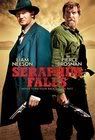
MOVIE REVIEW: Seraphim Falls


I remember while watching Nevada Smith as a boy being befuddled near the movie’s climax when Nevada has a change of heart toward the man who killed his parents. The same man he had vowed revenge on and pursued for all those years. He sought this man the entire movie only to give up now? It made no sense. My cousin explained to me that heroes don’t kill for revenge and Nevada realized this thus becoming a true hero. Oh, I thought. OK. That makes sense. The film set me up for revenge as Nevada’s triumph and instead, he achieved a triumph of a different kind. Wow, what a great movie my 8-year old self thought.

That was one of my first experiences with the Western. That archetype of the cowboy hero with the white hat has stayed with me – and stays with me still. Of course the portrayal of such heroes has become more complex. Perhaps, it was the cynical Vietnam-era movies like The Wild Bunch that ushered in the change. There the story centers on a ragtag group of anti-heroes and the viewer’s bloodlust is rewarded, in a sense, by a great violent ending (that also captivated my younger self). Live by the gun; die by the gun, so to speak. Later still, we have William Munny of Clint Eastwood’s Unforgiven. An anti-hero - his revenge scene is the best scene in a movie rife with great scenes -who can’t change yet he survives.

Mixing many of these archetypes and set on a smaller, character-driven scale – yet pregnant with epic ambition - is Seraphim Falls, a solid revenge movie that begins in the Ruby Mountains of Nevada in 1868 and ends in the cracked-earth desolation of a Nevada desert. Its main strength is the set-up: it begins as a terrific pursuit movie. Gideon (Pierce Brosnan) is shot while preparing a rabbit over a fire. He tumbles down the snowy mountain, falls into a icy river, and keeps on the move not knowing who pursues him or why. Soon we meet Carver (Liam Neeson) and 4 trackers. This opening sequence spans about 20 minutes and is done with minimal dialogue. It is exhilarating to watch. The patience of Carver contrasted with the frenzied escape of Gideon presents two elements that will define the rest of the story: Carver’s commitment to killing this man and Gideon’s ability to survive.

Carver wants Gideon dead for committing a terrible act of war involving Carver’s family in the waning days of the Civil War, an act that haunts both men. The one weakness of the screenplay (by David Von Ancken, who also directed, and Abby Everett Jaques) is that Gideon is given too much wiggle room to not be personally responsible for the crime against Carver’s family. His “it was war” excuse doesn’t satisfy Carver (and it shouldn’t), but it seemed that it tries to hard to exonerate him to the audience. In addition, the story almost loses its footing with some heavy-handed metaphors about using violence as an end versus finding a remedy to one’s problems. It worked for me – I didn’t mind the intrusion of the Indian at the waterhole or the traveling saleswoman peddling snake oil - with the exception of one scene where Gideon allows a bottle of elixir (“to fix what ails you”) to crash to the ground.

The movie is grounded by the performances: Brosnan is at his peak and probably the best I’ve ever seen him. Recovering in a small ranch while on the run, he has a gentle scene with a young boy then turns steely as the boy makes a grab for his satchel. Neeson matches him. His stature serves him well as the pursuit begins – he bullies the other trackers with the right amount of authority and threat. He faces an imperious railroad foreman with disdain and guile. Then his hulking presence, with the shoulders drooping, as he and Brosnan are both beaten and weary from the pursuit shows the cost of his obsession.

Carver’s quest for revenge puts him on the road that Gideon has been traveling all this time. Coming across an abandoned wagon in the desert, Carver remarks that there are choices a man makes to end up in a place like this. The real trick is finding out what a man needs to do to get out of a place like that.

Tuesday, January 23, 2007

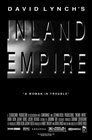
MOVIE REVIEW: Inland Empire


David Lynch’s Inland Empire is, to be utterly unoriginal about it, an enigma. I’ve enjoyed his films in the past, most notably Eraserhead, Elephant Man, and The Straight Story. Blue Velvet had it moments as did Mulholland Drive. Of his past films (that I have viewed)Inland Empire shares the most similarities with Mulholland Drive. The aspects of Mulholland Drive that lost my interest are the same elements that take up almost 2 hours of Inland Empire’s almost 3 hour length. Sure, Inland Empire is an enigma, but it’s a candy store Chinese puzzle type of enigma: you can’t work it out and you don’t know why you bothered in the first place.

OK, perhaps not as superficial as the above example. It’s dazzling at times and the cat and mouse with the audience about what is real; what is part of the movie being made within the movie; what is a dream; has this character assumed the identity of that character is fascinating. At first. But on and on it goes with more possible dreamscapes and switched identities and movies within a movie and possibly dreams within dreams. I lustily stayed with all these gear changes waiting for a great sorting out, but as it reached its end, I knew that no narrative conclusion would be found. On and on it went. Even into the credits, where a dance number took place among the characters of the movie. That was actually fun and zany – in a regular zany way, not in the David Lynch zany way.

The story, as it where, is about Nikki Grace, an actress, (Laura Dern) getting a plum part in what could be a comeback role. Cast opposite her in the movie is a womanizing young actor named Devon Burk (Justin Theroux). Nikki also has a jealous husband. And on the first day of the shoot, they all discover that the movie was made once before with terrible ends for the actors involved (due to a gypsy curse). Also, Nikki, before getting the part, meets a new neighbor who tells her about a boy who brings evil into the world and a girl who gets lost at the market. So far, so good. The movie establishes this story thread tightly with limited interruption from the various dreams, motley characters, and settings that will soon intrude.

Then there’s a weeping woman watching a TV and three anthromorphized rabbits on a sitcom set - laugh track and all. Later there’s a bunch of Hollywood Boulevard prostitutes with hearts of gold or sad empty eyes, depending on the scene. Oh, I almost forgot about the Eastern European circus workers who show up at a suburban barbeque. And the odd office of a rumpled man atop a strip club. Somehow the movie moves along undistracted by all these seemingly incongruous elements. It’s actually sort of ingenious how it does move along: Nikki goes through a door and her reality changes. It sublimely done and I’m sure Lynch fans will pay close attention to all the doorways in future viewings and track the various levels of the story that way.

I will say this for David Lynch: he can create a sense of foreboding from familiar situations like no one else. Blue Velvet’s tension between the placid life of suburban America contrasted with it’s seedy underbelly established this foreboding in a way that was miles ahead of its time. While mimicked countless times since, other filmmakers just don’t have the surreal approach of Lynch to pull it off. This same uncomfortableness is on display in Inland Empire. Drapes are blood red, lamps buzz as if they were hives of angry hornets, and living room conversations over tea take on a sense of danger. Lynch cues this with close-ups of reaction shots and quick cuts between the conversation. Much of this is counterbalanced by other scenes that are brightly shot and are sweet or funny or absurd (like the prostitutes breaking into “Locomotion.”) These patented Lynch touches prevent the wheels from falling off. In fact, in some ways, these scenes are the glue between the dreams, the alternate realities, and the downward spiral of Nikki Grace and/or her character in the movie within the movie.

Some of Inland Empire works: what works does so as individual scenes, as wonderful examples of the medium of filmmaking. Much of it doesn’t work. Ultimately, I was nonplussed by it all. It was an interesting ride that kept my attention but I left shrugging my shoulders when it was all over. Too many doors never closed. Too many windows into David Lynch’s mind that remain wide open.

Wednesday, January 17, 2007

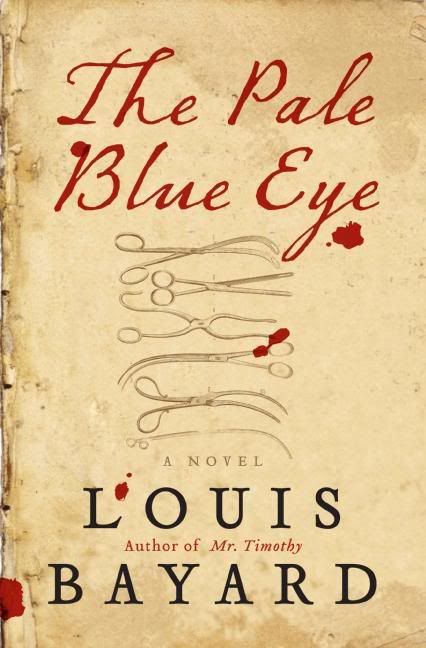
BOOK REVIEW: The Pale Blue Eye


Gus Landor, a retired New York City constable is hired by West Point to investigate a cadet’s mysterious death in the autumn of 1831. During the course of the investigation, Landor employs the help of another cadet. That cadet, it turns out, is a young Edgar Allan Poe. And thus is the set-up for Louis Bayard’s latest novel The Pale Blue Eye.

Bayard expertly maps the rigors of cadet life in the 1830’s as well as the political reasons that the U.S. Military Academy wants to keep the investigation quiet. It’s subtle and comes out through Landor’s observations and conversations. Landor, recently widowed and fairly new to the upstate New York region that houses the Academy, serves as a wonderful pair of eyes and ears for the reader. He is a stranger to military life and his past occupation as a detective allows him to provide his tale with the details of the discipline and mind-set that his investigation runs up against.

Landor immerses himself in the investigation and Poe becomes an invaluable asset. But as a similar death follows, and Poe’s performance as a cadet and sleuth come into question, Landor tests the patience of Captain Hitchcock, the Commandant of Cadets. Hitchcock wants results and views Landor as hostile to a soldier’s life and too forgiving of Poe’s eccentricities. Most importantly, he concludes the investigation to be proceeding at a snail’s pace. And for a while it is.

There’s a certain elegance to how the story simmers and simmers in the mid-parts. The deaths remain at the forefront but move to the wings as we witness Landor and Poe’s bond grow stronger, first as kindred spirits, later as intimates – only in that formal mid-19th century American way, of course – where the pretense of the formal address of “Mr. Landor” and “Mr. Poe” are stripped away to the more familiar address of Landor and Poe. (In a humorous touch added by Bayard, Landor mentions this evolution in his narration, but outside of that mention, he always addresses Poe as “Mr. Poe” throughout the telling, even in the most private of drinking sessions.)

Once the plot does boil over, it does so wearing full Gothic regalia. The mystery opens up peculiar secrets and hard truths with family histories exposed that would have made the Bronte sisters proud. It’s a credit to Bayard’s plotting and writing style that such extravagances meld so well with the personal trajectories of Landor and Poe, both of whom are guarding secrets as well.

Poe works undercover and submits to Landor written reports that are at once informative missives about his findings as well as beautiful odes to whatever topic Poe is pondering (usually involving Miss Marquis, the young beauty he falls for) that includes over-the-top flourishes that only a young poet who doesn’t yet have the life experience to know what to write about would use. Bayard charmingly strikes the balance between the genius Poe will become and the young somewhat defensive eccentric he is at this time (at least by the U.S. Military Academy’s standards of behavior). Unlike some historical fiction that use a younger version of a notable figure, Bayard doesn’t use this as an opportunity to layout a template for Poe’s later acclaim (though Poe does write a poem with a character named “Leonore” and threatens a classmate in a manner not unlike Montresor in “The Cask of Amontillado”).

The Pale Blue Eye is the sort of historical fiction I like best. It doesn’t attempt to define a time with broad strokes or fill it up with empty foreshadowing of things to come. Rather, it uses character and human interaction to transport the reader to that time. From the bucolic descriptions of upstate New York to the reserved good manners at a dinner party, Bayard achieves in creating a wonderfully ripe world full of folly, cunning, obsession, and gallows humor. In other words, a world fit for the likes of Edgar Allan Poe.

Sunday, January 14, 2007

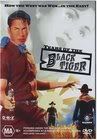
MOVIE REVIEW: Tears of the Black Tiger


Tears of the Black Tiger, a Thai film made in 2001 and now only released in the U.S., is a studied compendium of genre. There’s melodrama on par with The Girl of the Golden West and Oklahoma; stoic gunslingers who would not be out of place in 1950’s B-movie Westerns; gun violence worthy of Sergio Leone and Sam Peckinpah; and stylized violence, like bullets going through teeth or removing a skull, that echoes the post-Tarantino world of nonchalant death. From the painted techni-color of the landscapes to the angled close-ups of six-shooters firing to the wonderfully anachronistic use of bazookas, machine guns, and even cars (is this 1880’s or 1930’s Thailand? It’s never clear, and in the end it doesn’t matter) Tears of the Black Tiger works even when the back-story doesn’t quite jibe with the overall plot.

There is, of course, star-crossed lovers and unrequited love: Dum, the son of a peasant, and Rumpoey, the daughter of a local official, first meet as children. Later, after an unfortunate childhood incident involving an oar fight while out on a row, they meet at college. A year later they still pine for each other, although, she is engaged to a young captain of the local police and he is a member of a notorious gang and is known as the Black Tiger. Of course, the police captain must hunt down the gang.

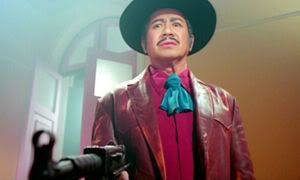
This all unfolds in settings rich with a full palette of blue and pink and golden hues. Rain also falls and lighting strikes at the appropriate moments where needed. The camera races in on Dum’s face to better collect his reaction to situations. Fai, the gang leader (played by Sombat Metanee, who must be Thailand’s version of Fred Ward) sows disharmony among his ranks by elevating Dum so quickly much to the chagrin Mahesuan who formerly enjoyed that privilege. The big battle scene between the police and the gang plays out like a cartoon. In fact, much of it is cartoonish: Mahesuan laughs with a deep villainous bellow and adorns his lip with a dastardly thin mustache and his body with garish cowboy attire.

All in all, Tears of the Black Tiger just doesn’t let up. It’s smart enough to know how to incorporate years and years of genre exercises without overplaying its hand and smart enough to also know how not to over-stylize it. It’s small when it needs to be as when it fleshes out the love story of Dum and Rumpoey. It’s over the top when it needs to be as when it intrudes on that story. Most importantly, despite the inconsistencies throughout, it’s simply grand fun to watch.

COMIC BOOK REVIEW: Shock SuspenStories


EC Comics collects the first 6 issues of Shock SuspenStories, originally published in 1952, as part of its EC Archives editions. Included with the stories are the editor’s columns and letters page as well as the ads that ran in the original editions. The influence of these stories can be seen in so many comics, movies, books and TV over the last 50 years.

Shock SuspenStories served as EC’s “sampler” comic. It contained horror, crime, science fiction, and war stories. In addition, they also included another category: the “shock” story. These tackled social issues from racial injustice in the southern United States to the Red Scare. I’m no comic historian, but these, to me, are eons ahead of their time than other 1950’s comics in the message of tolerance. Of course, to live up to the billing of being a “shock” story, many aspects are bluntly and crudely portrayed, but with only 7 or 8 pages to work with, I’m sure the reading audience didn’t mind the intrusion of a political viewpoint in their horror stories.

Even at it’s silliest – and there are some silly stories in here – there’s always at least one panel of artwork in each story that is just amazingly presented. The larger size of this hardback with glossy paper in full color really brings the artwork home. There’s even a short essay about the innovative lettering style some of the EC artists employed.

Many of the stories rely on the twist or surprise ending, many of which are telegraphed way ahead of time, mostly because in the last 50 years, this method has been copied many times over. Regardless, it’s always fun to get there. This collection is essential reading for any comic book fan.

Tuesday, January 02, 2007

D-Train


Late morning on the last day of the year. I jump on a Brooklyn bound D-train. I have a bad feeling in the back of my head concerning the amount of water I have drunk this morning. I have an hour-long trip on the subway I should have made sure to go to the bathroom before I left my apartment.

The train pulls into my stop just as I am walking down the stairs and onto the platform. Off to a good start. Not many people around either. It’s one of the trains that in the middle of the cars the seats are arranged three in a row against the wall with a set of two perpendicular to the aforementioned three. The set of two has another two connected behind them in tandem, which are again perpendicular to three and so on. I sit closest to the wall in one of the paired seats. I could have sat anywhere, as the car was fairly empty, but I felt like being in a corner where I can just immerse myself in the book, The Brooklyn Follies by Paul Auster that I am reading. Right when I sit down, I begin to question my judgment. The seat is terrible. There is hardly any legroom even with the train near empty. I glance around. I understand the purpose of mass transit but I now realize how completely utilitarian a subway car is. The only concern is carrying capacity and efficiency. I’d be surprised if comfort ever came up in the discussion. I feel contempt for the soulless engineer that designed it.

I make myself as comfortable as possible by stretching my legs to the side, placing my elbow over the top of the seat, and having my backpack on the seat next to me. I usually try to take up only one seat while riding the subway. I don’t worry about that now because I got on the train at the West 4th station, which can be busy, so if the car is empty now, it is not going to fill up. I begin reading, ignoring my bladder, and sure enough, within a few stops there is maybe three people in the entire car. I can now concentrate on my book rather than looking up every stop to see if I need to straighten up or move my backpack to the floor.

I continue reading and the train moves along making its regular stops. Suddenly my elbow is pushed off the top of the seat by another passenger’s back. Someone has just sat directly behind me. I look up from my book. There is no one else on this half of the train. Why in the world would someone sit right behind me? I am confounded. I turn around to get a look at this person. I don’t know if this is a universal feeling but whenever I am completely annoyed by a stranger I need to put a face to such annoyance. Whether it is talking loudly during a movie or bringing extra-large carry-on baggage onto an airplane I just need to see exactly what the offending person looks like. But this person is right behind me. I can’t make out specific features. I crane my neck to look and as I do I see their head turning as if they know I am trying to look at them. I don’t want to be rude about it but I am now determined to get a gander. Frustrated I look across the aisle, out of the far window, hoping the grimy tunnel wall passing by outside provides some insight. To my surprise, I realize that I could discern the features of this personal space intruder from the reflection in the glass as we travel through the darkness. I set a lingering gaze onto that window and become a subway peeping tom. I bypass rude and step squarely into creepy.

From the reflection I can tell that this passenger is a stocky, older woman of Eastern European or, perhaps, Russian descent. She wears an old, heavy wool coat and a kerchief wrapped around her head. She could have walked through Ellis Island eighty years ago dressed like that without raising eyebrows. None of this explains why she would sit where she did. Now, I could have gotten up and moved to another seat. But why should I have to move? A stubborn force deep inside me that I neither question nor contemplate makes me stay put. I try to make some sense of it. Maybe this was the first seat she spied upon entering the train, and used to rush hour traveling where seats can be a rare commodity, she just sat down. Now that she realizes the rest of the car is empty some stubborn force within her is holding her in that seat. We are the subway version of those Dr. Seuss characters – the North-Going Zax and South-Going Zax - steadfastly holding onto our seats, refusing to budge.

I try to concentrate on my book but to no avail. I am way to annoyed. In fact, I am doubly annoyed as I realize I really should have gone to the bathroom before I got on the subway. Every stop I look up from the same page and wonder if she will finally get off. I try to think of more reasons why she may have sat there. Perhaps, in her dotage, she feels vulnerable and sat close to me so I could act as her protector. I mull this over, almost coming to a point where I feel valuable, even proud that she would think so highly of me. I look again in the window, see her reflection, and realize the ridiculousness of this assertion. I assumed she is of Eastern European or Russian heritage due to her stout, earthy stature. She won’t need protection from me. If any interlopers did board the train, I imagine her reaching into the expansive handbag sitting on her lap under her folded arms, taking out a wooden rolling pin, brandishing it high over her kerchiefed head, yelling threats in a strange tongue, and chasing them away. On second thought, maybe I should be glad she sat near me.

I now notice she is sleeping. In the window, my seeing-glass to all that annoys me, I can see her head tilted forward, bobbing slightly up and down. My annoyance grows. She sits down, ruins my train ride and now has the temerity to sleep. I decide I need to make an extra effort to bury this annoyance and just read.

I am able to do so. Quite successfully. Pages turn and I become more engrossed in the story. A chapter ends as we roll into a station. I look up to see what stop it is and she’s gone. Sometime over the last few stops she exited the train without my noticing. I should be elated. I can now read unencumbered. But disappointment envelops me. I attempt to analyze this new feeling. Am I disappointed in myself? This whole time I never looked at her as a fellow human being. Her annoying me was the only reason I even noticed her. Have I become that type of city person who, walking around in a self-involved stupor, never acknowledges another's existence unless they cause affront?

These thoughts quickly dissipate as I pinpoint why I feel disappointed. I never got to recognize her leaving, as it happened. That’s why I’m disappointed. Her sneaking away didn’t allow me gloat about her not being around to annoy me anymore. Even in her absence she finds a way to annoy me. But, then again, maybe I’m annoyed because I really have to go to the bathroom now.

Monday, January 01, 2007

MOVIES: 2006 Overview


My list of best movies for 2006 consists of 3 truly great movies at the top, any of which could be considered my favorite, followed by a few other great films then topped off by a handful of near-greats that made strong showings. Not a bad year of movie viewing – and there’s plenty of films that have high recommendations that I haven’t yet watched. Many of these have been reviewed in full elsewhere on the blog. Some may have upped their impact on me since I wrote the original. Others may have lost some momentum. It also seems as if Nimero and I, with a bit of shuffling here and there, have a Top 5 that mirrors each other. I’m sure he wouldn’t argue with my preference, as I fully know where he’s coming from with his. Now, without further interruption, here’s the Top 10:

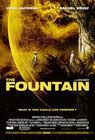
1. The Fountain: Beautiful in concept and execution, Darren Aronofsky tells a visually stunning and daringly complex story about love. Three stories each set about 500 years apart meld together to describe the life, death, loss and hope. Intelligent and never condescending or pretentious, The Fountain kept me thinking about its story long after I left the theatre. Smart and moving and poetic, it’s all I could hope for in a movie.
Full Review

2. Pan’s Labyrinth: Guillermo del Toro deftly balances the horrors of Spain during its civil war in 1944 and a child’s escapist fantasy. The magical realm a young girl finds herself in mirrors the devastation and fright of the real one, so that it’s difficult to tell at times which one is informing the other. By examining the choices (and the lack of choices) one must make in harrowing situations, and the bravery and loyalty –and innocence and the loss of innocence – involved in those choices, the result is a beautiful, sad and yet hopeful movie.

3. The Prestige: Multi-layered story of rival magicians and their obsessions – personally and professionally and the crossing of the line with each – expertly told with fine performances by Hugh Jackman and Christian Bale. Engagingly paced, with the right elements revealed at the right time like the best of all magic tricks. It’s no illusion that this is one of the year’s best.
Full Review

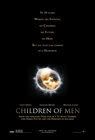
4. Children of Men: A dystopian nightmare of a story set 20 years in the future in London where immigrants are the enemy and the human race can no longer reproduce. By focusing on character instead of political statements, it makes more of a statement by keeping the story small and rich. It’s thrust forward and the momentum keeps it going to the end with great direction that doesn’t get in the way even after you dare take a breath. Michael Caine gives the best supporting role of the year as an aging radical living in the woods.
Nimero’s Review

5. 13 (Tzameti) : A taut movie in the great noir tradition of the everyman getting in over his head and walking the tightrope of consequences that follows. Gripping and intense, this simply stylized film never misses a beat. A young handyman follows the directions on a note taken from a client’s house, which leads to, well, go see it. I’m not going to spoil it. And don’t watch the trailer if you want to walk into it unawares like I did.
Full Review

6. The Departed: Martin Scorcese’s thriller about a mob informant in the police force and an undercover policeman in the mob is well conceived and tightly done. The set-up to the story unfolds in time, the plot speeds up, and after a slow build-up its denouement is brutally efficient. Initially, I found aspects of it lacking, but over time it settled in as a near-great cops and robbers flick.
Full Review

7. Babel: Interesting and compelling, Babel weaves in and out of three stories loosely hinged together by a single plot device. It covers the world: Morocco, Southern California and Mexico, and Japan. Beautiful and human, it holds itself together without being overwrought or collapsing in on the weight of itself. It’s a moving testament to the unknown connections that bind us all.
Full Review

8. The Proposition: A lawman makes a devil’s bargain with a captured member of a notorious gang: he can save his younger -also captured - brother by killing his other brother, who is the grizzly and amoral leader. A bleak look at justice and duty versus right and wrong. The lonely landscapes of an untamed Australia provide an effective and moody backdrop.

9. Brick: Dashiell Hammett and Raymond Chandler hard-boiled noir set in a contemporary high school comes off astonishingly well. Inserting knowing irony or winking at the audience could have easily sidetracked this idea. Instead it plays it straight as a murder mystery unravels and the school loner embarks as the Marlowe-like errant knight to find out hat happens. Smart as a crisp shirt.

10. Night Watch: A well-made, stylistic fantasy / Sci-Fi movie from Russia that is at once straightforward and simple yet full of texture and richly drawn characters. Light and Dark’s uneasy truce triggers the plot and effective use of sub-titles as special effects adds to the enjoyment. A terrific ride.
Full Review

Most Disappointing Movie of 2006

Beowulf & Grendel: Ever since I read Seamus Heaney’s gripping translation of this epic classic a few year’s back, I’ve been waiting for a big screen experience. I’ll have to wait for one of the other Beowulf projects because this Beowulf & Grendel is not it. Beowulf lacks heroic charisma. Grendel is humanized. Grendel’s mother is almost treated as a laughable afterthought. Sarah Polley, an actress who I have admired ever since The Adventures of Baron Munchausen, is terribly miscast as witch in cahoots with both Beowulf and Grendel! It’s not terrible. It’s not epic in any way either. It’s just blah.

Saturday, December 30, 2006

MOVIES 2006


2006 was a solid year for movies. I saw a surprising amount of movies released this year (over 30) considering that I began graduate school. It was tough to find one stand-out among many great films, unlike last year where 2046 was an easy top choice. As it turns out, the last movie I have seen for 2006 is also my number one this year. All of the top five could probably be interchanged "as befits my mood or general countenance." I'll be interested to revisit this list next year and see how I feel about my rankings.

The comic book movies I usually enjoy were all disappointments (V For Vendetta, X-Men: Last Stand, and Superman Returns.) I also thought I saw more documentaries than I did (An Inconvenient Truth and American Hardcore), but that must have been 2005 where I was doc heavy. Time blurs all. And there are many well reviewed movies that I have yet to see (Letters from Iwo Jima, United 93, Little Children among others.)

Below is my Top 10 list followed by five honorable mentions. I've also added what I consider to be, by far, the two worst movies I have seen this year.

2006 TOP 10 (order of preference)

Pan's Labyrinth
A young girl, Ofelia (Ivana Baquero), is brought along to a military outpost in 1944 Spain to be near her pregnant mother's new husband, who is a Captain in Franco's army. With civil war raging around her, Ofelia enters a fantasy world to escape this new reality. A deeply moving film, perfectly paced and layered. It says so much about childhood and adulthood and the coping mechanisms used to safely travel through both. Director Guillermo del Toro expertly and seamlessly mixes the fantasy world with the real world resulting in the best movie of 2006.

The Fountain
As an unabashed fan of Darren Aronofsky I may admire The Fountain more than I should. Rachel Weisz and Hugh Jackman are two lovers who through the ages – in Year 1500, 2000, and 2500 – search for eternal life. The film easily intertwines all three time periods, each individual story arc concluding and adding to that quest. It will keep you thinking about it long after you see it. I don’t have it completely figured out yet. But that’s why I like it so much.
Colbinski's Review

Children of Men
A dystopian world twenty years in the future is the setting for Alfonso Cuaron's excellent new film Children of Men. Women have become infertile, a police state rules by fear, and the youngest person on Earth, just over eighteen years old was just murdered. A government worker (Clive Owen) is thrown into the middle of an "uprising" against this world. Spectacular camera work, a where-is-this-headed story, and wonderful performances makes this one f the best of the year.
Full Review

Three Times
This film disappointed me directly after viewing. It was the first film I have seen by acclaimed filmmaker Hou Hsiao-hsien. I had heady expectations going in, knowing only the premise of three separate stories told in three different time periods with the main characters of each story played by the same actor and actress (Chang Chen and Shu Qi). Each story deals with love and observes the circumstances and obligations that make love either possible or non-existent. The first story “A Time for Love” set in the 1960’s, is perhaps the most perfect love story I have ever seen put on film. Everything about it is enchanting. Following this opening story, the next two, “A Time for Freedom” and “A Time for Youth”, while above average, felt like a letdown. It is only in subsequently dwelling upon the film as whole that I have come to appreciate all the stories. The film looks beautiful and the leads make each of their three characters their own. Even if the other two stories were a mess (which they are not) I would recommend this film on the strength of “A Time for Love” alone.

The Prestige
Two rival magicians face off in a great film filled with wonderful performances. Christian Bale and Hugh Jackman excel in the leads. Magic and intrigue drive the film forward. A story of showmanship and human drive that continues to surprise all the way to the final scene.
Colbinski's Review

13 (Tzameti)
A taut thriller about an Eastern European immigrant who, while looking to make some extra (and easy) money, gets in over his head. A gripping well-done film. I was aware of a huge spoiler before seeing this movie and it was no less gripping but it is best to see it knowing as little as possible.
Colbinski's Review

L’Enfant (The Child)
A two-bit crook sells his and his girlfriend’s newborn child to make some extra cash and thus begins a searing drama of bad choices and their consequences. Unlike most Hollywood movies that attempt to manipulate and moralize to the viewer this film from Belgium focuses an objective lens on all its subjects. It is a different sort of experience and at times seemed disconcerting to this American filmgoer. This straightforwardness in storytelling is rewarding in and of itself and not because of the machinations of the filmmakers.

Babel
Another tale of intertwining stories and fateful coincidences, Babel has much more to offer than the simple resolutions and treacle platitudes of Crash, last year’s winner of the Best Picture Oscar, to which it has been compared. Babel has a large international scope and the story divides time between the U.S., Mexico, Morocco, and Japan. Babel doesn’t try to hit you over the head with its message, if there is even a larger message than the human one told in each segment. All the stories have their positives and it is telling that the most interesting story, occurring in Japan, is the least related to all the others.
Colbiski's Review

The Illusionist
It’s turn of the century Vienna and an Illusionist (Edward Norton) enters the city to ply his trade entertaining the masses and gaining notice from the Crown Prince (Rufus Sewell), the Prince’s finance (Jessica Biel), and the local Chief Inspector (Paul Giamatti). Filmed is dashing sepia tones, this film overcomes the tired tropes of class war love triangles and provides a satisfying intelligent story.
Full Review

Little Miss Sunshine
The only movie that can be described as a comedy on this list, Little Miss Sunshine, is a delightful, if familiar, story of a dysfunctional family on a road trip. As things usually go in these movies, momentous events occur and the family gets to know each other and themselves a tad bit better. While not as predictable as you may expect from that description it doesn’t hold huge surprises either. It’s a movie that knows what it is and ends up doing that well.


2006 WORTH A MENTION (alphabetical order)

Brick
You can be forgiven if you think of Bugsy Malone upon hearing that Brick is a film noir set in high school. But Brick is no farce and takes it’s characters seriously and cleverly twists the conventions of film noir to fit teenagers’ angst. Joseph Gordon-Levitt and Lukas Haas stand out in this fine film.

The Death of Mr. Lazarescu
As in L’Enfant, the camera in The Death of Mr. Lazarescu is almost documentary like in its followings of its subjects’ story. Mr. Lazarescu, an old drunk living by himself in Bucharest grows ill and needs medical attention. Apparently, this movie is a bitter indictment of the Romanian health care system. Be thast as it may, when focused on the smaller issues we are left with a sad story of a life forgotten or ignored by the strangers a man meets in his last few hours and by those who should have been close to him for the rest of it.

The Departed
Adapted from the Hong Kong film Infernal Affairs, Martin Scorsese places this police thriller in Boston. An undercover agent (Leonardo DiCaprio) infilitrates the mob as a policeman (Matt Damon) loyal to the mob boss (Jack Nicholson) rises through the ranks of law enforcement. Although the movie seems to lose steam around three-quarters in and then ends abruptly just as the steam seemed to be coming back there are fine performances all around.
Colbinski's Review

Night Watch
A densely packed film concerning an age-old battle between the forces of Light and Dark. Light has formed the Night Watch to protect against the Dark. All this takes place in modern day Russia. A hyper frenetic movie highly stylized yet still intelligent.
Colbinski's Review

The Science of Sleep
Eternal Sunshine of the Spotless Mind, directed by Michel Gondry was my #1 movie for 2004. The Science of Sleep, written and directed by Michel Gondry has the similar themes of a quirky love story where most of the main action occurs inside one the character’s head. It is decidedly offbeat and Gael Garcia Bernal fulfills all the potential he showed in Y Tu Mama Tambien. This film is well above average but lacks the cohesion to be truly great.

WORST MOVIES 2006

The Break-up
A terrible mish-mash of a movie. Too long, too uneven and despite its promotion as a “star vehicle” for Vince Vaughn and Jennifer Aniston, these “stars” are mediocre in their performances. Like any bad relationship, you’ll be glad when this movie ends.

Hard Candy
A young girl turns the tables on a would-be internet child molester and possible murderer. She’s a modern day Little Red Riding Hood (even wearing an oversized red sweatshirt) who doesn’t need the woodsman to come save her. At turns this movie is ugly, clichéd, and utterly ridiculous.
Friday, December 29, 2006

MOVIE REVIEW: Perfume: The Story of a Murderer


It is appropriate that the opening scene of Perfume: The Story of a Murderer frames a figure in silhouette and as he leans into the light only his nose is illuminated. Based on a novel by Patrick Suskind, here is a story of olfactory senses leading a man to...well, take a look at the title of this film for a hint.

Directd by Tom Tykwer, Perfume: The Story of a Murderer, has some good ideas and execution but the overall story falls flat. Ever since the frenetic Run Lola Run, Tykwer has slowed his movies down while encompassing a longer run time all in an attempt to make "meaningful movies". He succeeded splendidly in The Princess and The Warrior, worked the concept to respectable results in Heaven but now has failed with Perfume. Perhaps Tykwer needs to collabarate again with Franka Potente, the star of Run Lola Run and The Princess and The Warrior. to return him to his old form.

The opening scenes of a baby, with a preternatural sense of smell, born in an 18th century Parisian fish market, with the camera flashing around to everything and anything that may emit an odor shows promise. I enjoyed the leisurely pace showing this child, Jean-Baptiste Grenouille (Ben Wishaw) grow to appreciate his ungodly sense of smell through the orphanage and into an apprenticeship at a tannery. It is when Grenouille is taken under the wing of a perfumer, Baldini, played by a wildly out-of-place Dustin Hoffman, does the movie begin to flag. It is also here where we see where this is all going. As Grenouille explains to Baldini after an unfortunate meeting with a girl in an alley, he needs to "capture scent". This quest becomes the essence of the movie and you are either along for the ride or not. I anticipated the ride and eagerly followed along to the perfume capital of France, the city of Grasse, and Grenouille's obsession with Grasse's female's scents. But then the ride ended.

The ending, in its ridiculousness, betrays the seriousness the movie takes pains to otherwise portray. Unless the whole thing is to be taken as farce. But then the "meaning" of the ending is rendered meaningless. So its a no-win situation regardless of what viewpoint one holds. Upon reflection there is also much unfulfilled promise throughout. No explanation for the unfortunate circumstances people find themselves in after Grenouille leaves them. No investigation of what its like to be overwhelmed by all the smells in the world. It's as if Grenouille can control, at will, what odors enters his nostrils.

While the movie does not go to any lengths to have us empathize with a murderer, empathy does hover around the edges. We know the quest and have witnessed all that has led up to it. I even found myself secretly rooting for a murder that would result in the quest's completion. It is only with seeing what is done with the results that a quest can be considered successful. It's seeing these results on the screen where the disappointment sets in.

MOVIE REVIEW: Children of Men


Set in 2027 Britain, the world of Children of Men is an exaggerated version of the worst of what is witnessed today. A police state governed by fear, a war on illegal aliens, and propaganda disseminated 24 hours a day may seem distant but not at all unlikely. All this is precipitated by the inexplicable infertility of women almost twenty years prior. That we are never told why women stopped having babies or how that resulted in such a dystopia is one of this film's primary strengths. The people inhabiting this future don't understand it either; we are with them in solidarity, viewing their desperation as our own.

We begin watching Theo (Clive Owen) go through the motions of his day. Purchasing coffee, pouring liquor into the cup. Not even the death of the youngest person on Earth, at just over eighteen years old, or the bombing of the cafe he just left seem to touch him. Theo is presented as a disaffected, uncaring man able to see the world around him for what it is but eerily detached from it all the same. Even after we learn about his political activism past, the reasons for his detachment, and he is placed in a position to help usher in a possible new future, Theo still presents a knowing resignation.

Theo is kidnapped by the Fishes, a rebel group readying for an uprising against the government. Theo’s ex-wife (Julianne Moore) is their leader and brings Theo aboard because she “trusts him”. The Fishes have in their ranks Kee (Clare-Hope Ashitey), the first pregnant women in almost twenty years, and hope Theo can help bring her across borders to the Human Project, supposedly a group of scientists building a better tomorrow. At this point an already interesting premise takes a new life. The film is not predictable but never delivers unbelievable twists. Everything about it seems just so.

All the performances in this film are top notch. Clive Owen, in particular, stands out and solidifies himself as one of the best actors out there today. Alfonso Cuaron does the best directing job of the year. Using tracking shots and a hand-held camera, the viewer is immersed into the story along with the characters. The violence and action is sudden and jarring, the actors on the screen reacting as we do in our seats. The climax is relentless in its focus and the brief intermission of quiet that occurs is made that much more potent due to the subsequent explosions of fury.

Yet I would not describe it as an action movie. Nor would I pigeonhole it as a science fiction movie. Plain and simply, it is an intelligent movie. It makes you question the world you see around you everyday and forces you to answer uneasily, "Can that really happen?" It is a realistic movie set in the future with easily recognizable characters. There are no simple solutions or cures. Theo is thrust down a road of doubt but keeps moving. Theo never picks up a gun, never decides to fight the "bad guys". Circumstances control him. He is in a situation where the opportunity to do good, to do something right presents itself. And he tries. That's just the type of hero his and our world needs.

Tuesday, December 26, 2006

Quixote


I once knew a girl with whom I often spoke to about stories. We discussed film, books, and short stories mainly but eventually delved into everything. Comic books, television, or plays: nothing was out of reach for conversation and opinion. We shared our likes and dislikes and made recommendations to each other. After recommending a favorite author never read or a film unseen, we both waited anxiously for the other to finish reading or viewing so we could talk about it. I’m sure our conversations had the naiveté of an undergrad literature class or, worse, the pretension of an MFA thesis paper. But we didn’t care.

One day, I was in this girl’s apartment looking over her book collection, which was contained within a medium sized bookcase in an otherwise spartan bedroom. I was sitting on the floor with my legs crossed Indian-style poking around the shelves and yelling comments and questions into the other room where she was occupied. Eventually she came in and sat on the floor leaving me between her and the bookcase. While discussing what she enjoyed and asking if I could borrow this or that I began talking about some recent books I had read. I just went through a phase where I was reading classics such as The Count of Monte Cristo and Ivanhoe and I was prone to bore people with how great they are. Sensing I wasn’t going to stop prattling on about the superior storytelling prowess of Dumas and Scott any time soon, she hurriedly pointed out a classic she had on the bottom shelf.

I don’t know how I hadn’t noticed this oversized book. It was an all-together impressive, splendid tome. She explained that it was Don Quixote by Cervantes. It really was a piece of work. For all I knew monks in Spain hand-printed this copy. Not since my days as an altar boy have I held something so ornate.

As I lifted it out of its shelf I sensed from her a reluctant excitement in sharing this book with me. While I was busy admiring the handiwork of the binding and gold edged pages she quietly explained how she had always wanted a book like this and mentioned painted illustrations on the pages. I took some time exploring the outside of the book, turning it over in my hands. I felt the aged brown leather, which covered it in entirety, the exquisitely raised gold bands along the spine and gold old-style lettering indicating title and author on the front. It was compellingly beautiful. I could only wonder what the actual pages and illustrations must look like. Just as I was about to crack it open I looked up at her and caught her eyes.

She had the most expressive chestnut brown eyes. They sparkled like stars, lighting up her surroundings, especially when she smiled. And she often smiled. There was no smile or sparkle then. Her downturned mouth elongated her face disconsolately and her eyes reflected a distant sadness. I paused. She told me not to open the book. I looked back at her puzzled. She provided a defense of her “don’t open the book” policy of which the particulars escape me. I do remember it involved a childhood fondness of a Don Quixote cartoon, some family troubles, receiving this book as a surprise gift from her mother and not having read it yet. By the time she was finished it was no longer an explanation but a plea. I looked again in her eyes and was reminded of a grainy photograph of a seldom-used dirt road after a rainstorm.

I suppressed any further comment on the matter. I thought of asking a question or two about this mandate when I realized I would never understand the meaning of this to her. I let the weight of the book sink into my lap. I wondered how much this book weighed to her. I glided my fingers over the spine readying to fill the empty space it had left behind on the shelf. Even though I was seated closer to the bookshelf, as I lifted the book, I found myself handing it over to her. It was her burden, after all.

Saturday, December 23, 2006

COMIC BOOK REVIEW: Superman: Red Son (DC Comics)


DC Comics’ Elseworlds line is described as thus: “In Elseworlds, heroes are taken from their usual settings and put into strange times and places – some that have existed and others that can’t, couldn’t, or shouldn’t exist. The result is stories that make characters who are as familiar as yesterday seem as fresh as tomorrow.” Just as in Marvel Comics’ What If…? series, this premise allows writers to weave stories that may not fit the hero as we know them and not to worry about the regular continuity of the respective comics universes. This premise can provide hits or misses. Superman: Red Son is most definitely a hit.

Originally published as a three issue mini-series in 2003, and now available as a trade paperback, writer Mark Millar, pencillers Dave Johnson and Killian Plunkett, and inkers Andrew Robinson and Walden Wong do a more than admirable job of re-imagining the Superman myth. Superman, that iconic symbol of truth, justice, and the American way is now a Communist. In the mid-twentieth century, a rocket ship from an alien planet crashes onto a collective farm in the Ukraine rather than the Kent’s farm in Kansas. Interestingly enough, the values he learned on that collective farm do not seem that far removed from the values he learned from Ma and Pa Kent.

The story begins with Superman making his presence known in Moscow as an adult. Stalin sends a communiqué to the rest of the world: “Let Our Enemies Beware: There Is Only One Superpower Now.” As true as this appears readers familiar with the Superman saga know that Lex Luthor is still an American. Nonetheless, President Eisenhower still laments about how if that rocket only crashed into Earth twelve hours earlier Superman might be an American.

Along with Lex Luthor the rest of Superman’s friends, enemies, and fellow heroes make appearances. There’s Lois Lane, Lana Lang, Jimmy Olsen, and Perry White. Superman’s rogues’ gallery is still Lex, Braniac and Bizarro. Working from the concept that Superman was the lynchpin for all other DC Superheroes, the story introduces us to other well-known faces in unexpected ways. Batman is around, in a post-Dark Knight Returns incarnation, that plays foil to Superman’s new socialist values, and we learn what kind of heroes Wonder Woman, Green Arrow, The Flash, and Green Lantern have become now that Superman is a Soviet hero.

An insider’s knowledge of the DC Universe can add to the overall cleverness of this set-up but even knowing the Superman myth in only broad strokes will not endanger enjoyment of the story. From the hammer and sickle replacing the S on Superman’s chest to President Kennedy, now married to Norma Jean, and dealing with civil strife and a triumphant USSR, to a play on Superman’s disguise of wearing glasses, there is much to be found different yet familiar. There’s even a reference concerning exactly these types of re-imagined stories. The greatest strengths of Superman: Red Son is that it changes the Superman myth without changing Superman himself and it has an ending that sheds new light on that myth.

Wednesday, December 13, 2006

MOVIE REVIEW: The Fountain


Late in Darren Aronofsky’s The Fountain the entire scope of the film accomplishes some amazing things: it successfully maps together the 3 overlaying stories of the film – a conquistador’s quest for the Tree of Life at the request of Queen Isabel; a doctor’s quest to save his wife from brain cancer in the contemporary United States; and a lone space traveler’s quest to reach a faraway star – while at the same time transcending – and confusing - any concept of a linear connection between those three arcs. (I would go into more depth about my theories of the linear connection, but that would betray Colbinski Chronicles’ unwritten “no spoiler” policy that all reviews strictly adhere to.)

This scene, and the subsequent scenes intermixing back and forth from the past and modern day and futuristic stories, introduces many more questions than it answers, but at the same time brings coherence to all the storylines. It is precisely because of this coherence that the underlying mystery – that of love and death and hope and loss- resonates so acutely. In the end, there’s clarity in what hasn’t been told. There’s no moment that safely packs all the themes into a neat box, but if there had been, I’m sure I would have felt slighted. I’m glad to leave the theater with head-scratching questions about what it all means than to be treated to treacle full of hoary clichés.

And it is in this that the beauty of The Fountain is found. (Well, that’s not true, the real beauty is found in the palette of Aronofsky’s direction and film photography. The Fountain is visually stunning – from Rachel Weisz’s illuminating Queen Isabel shrouded in white by candles to Hugh Jackman’s bald and Zen-like spaceman floating through a kaleidoscope of vibrant oranges and yellows traveling in a bubble accompanied by a tree lush with green life. Not to mention the hauntingly exquisite score by Clint Mansell and Mogwai. But I digress.)

The way The Fountain eschews many norms of storytelling is telling. Essentially, the movie is about a man who will do anything to save his wife from dying. Add to it a pseudo time-travel angle, and a Conquistador in Central America plot, and one may get the idea that the film is either science fiction claptrap or inane action flick or indulgent melodrama. The Fountain avoids the trappings of all those limitations by not involving them in the framework. That is, the possible time-travel, if that’s really what’s going on, is never explained (I have a theory on this too - but that brings us back to the “no spoiler” policy) and this in-effect cancels out any melodrama. By not knowing the linear connection from the past to the present to the future, but by giving such full attention and detail to the specific capsule of time we spend with the Conquistador, the doctor and his wife, and the man in the bubble, Aronofsky delivers a thought provoking and triumphant film that tells its story in a real and true way that is only aided by a quest for the Tree of Life or space travel.

Something I noticed about Aronofsky’s films – this includes Pi and Requiem for a Dream, as well as for The Fountain – is the absence of humor. That’s not to say that his movies are humorless because they are not. Instead, he doesn’t use laugh lines as a crutch. His characters are real – they cope, they smile, they anguish, they love, they live, they die. There’s a truth to The Fountain that overrides the snobbish dismissals I’ve read. Sure I haven’t wrapped my head around all that transpires in the movie, but I know damn well that what is up on the screen is true.

Monday, December 11, 2006

MUSIC REVIEW: Cobra Noir “Barricades” & Pulling Teeth “Vicious Skin”


There are times while listening to various modern metal and hardcore bands that one can tell right from the opening notes where the band’s history of music begins. In the first seconds of the opening songs on Chainsaw Safety Records’s latest releases, Cobra Noir’s “Barricades” and Pulling Teeth’s “Vicious Skin,” one gets the feeling that these bands spent their teen years dulling their record player needle listening to the likes of Celtic Frost and Slayer and Motorhead. That is not to say that either of these bands sounds likes the aforementioned bands. They don’t. Simply put, Cobra Noir and Pulling Teeth are informed by these (and many other) bands. They know what they are doing in the heavy genre. And they do it well.

Montreal’s Cobra Noir play a more 80’s metal sound – a mid-paced metal. The songs possess dazzling tempo changes and not a few classic slow downs. The gruff vocals consist of the right mix of anger and urgency. The songs are complex without sounding too showy or, worse yet, like they have too many ideas poorly executed. These tracks are executed with precision and power.

Baltimore’s Pulling Teeth rely on a more modern influence for their heaviness. The sonic power and the morass of guitar sounds has some paternity to “Humanity is the Devil” era Integrity. The songs are also shorter than is usually found in the crowded field of current metal-core, and so never get boring or run out of steam. They charge forward like warriors on a battlefield, sweating and bleeding, assured of victory in some ancient rite.

All of the of bands that Chainsaw Safety has been releasing recently also fall into the category of being informed by music that isn’t necessarily reflected in the band’s sound. I also know that the proprietor of Chainsaw Safety Records is one of those people whose early musical experience was influenced by the same list above. Also, for full disclosure, I used to be the co-owner of Chainsaw Safety. My final involvement with the label was The Horror 10”. Scanning the impressive assortment of bands he’s put out since – Celebrity Murders, End of the Universe, Deathcycle, Sick of Talk, and now Cobra Noir and Pulling Teeth, well, it makes me feel like I was holding good old Will Tarrant back.

But I’m still waiting for him to release a Baby Harp Seal discography.

Monday, November 20, 2006

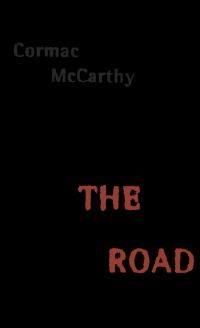
BOOK REVIEW: The Road by Cormac McCarthy


A father and his son travel south in a post- apocalyptic future seeking safer and warmer climes in Cormac McCarthy’s remarkable new novel The Road. They travel by roads, guided by an old, weathered map, avoiding wandering clans of cannibalistic “bad guys” in the words of the child. They’re armed with a pistol with two shots left and meager provisions stuffed into two knapsacks and a shopping cart.

The journey story is not new territory for McCarthy. From the Kid in Blood Meridian to John Grady Cole and Lacey Rawlins in All The Pretty Horses to Billy Parnham in The Crossing, it’s been the journey that has defined much of his best work. The father in The Road shares the same sense of duty and responsibility as these others. Though the hardships of each are singular and unique.

Many scenes of The Road contain abject terror as when the pair encounter these “bad guys.” The ruthlessness of the actions is coiled within compact paragraphs of stunning depth and matter-of-factness. The absence of psychological insight into why some choose to embrace evil while others choose not to only adds to the fear and dread. This same refusal to look inside a man’s capacity for evil is what makes the Judge in Blood Meridian so terrifying a presence.

Other passages serve as a placid travelogue of how they spent their days. The description of their provisions or of the fixing the wagon or of cleaning the clothes are so mundane that they are rendered beautiful because of the gray canvas of the world in which they inhabit. The story is episodic and straightforward. Days turn to night. Miles disappear behind them. They hunger. They find ways to cope with the cold.

The gentleness and the patience of the father in the face of such hardship is a test of endurance. The father and son share a can of coke rescued from an upturned soda machine. They ride the wagon down a slope into the wind. The father marvels at the child’s turn of a phrase. Where’d you learn that, he asks.

There is heft to the words here - this is Cormac McCarthy after all – but it doesn’t plum the depths that his previous work does. Whereas in Blood Meridian or the Border Trilogy, the world was in a transformative state, wilderness was tamed, and the industrial age was in ascension, the world of The Road has been transformed in finality. The reason for what happened to the world remains unsaid. The relics of the old world remain to be burned or pillaged. But no new system is ready to replace it. The battleship gray sky that blots out the sun, the gray ash that whirls in the winds: these are the new known world. The child was born after the transformation. This is the only world the child knows. And it is, perhaps, in that knowing where the hope of the novel lies.

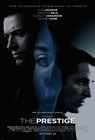
MOVIE REVIEW: The Prestige


Christopher Nolan, the director of the impressive The Prestige, is no stranger to obsession. In Memento a man with short-tern memory loss is obsessed with finding his wife’s killer. In Batman Returns he visits the obsessions of comic book’s most narcissistic obsessive. In The Prestige Nolan documents the dueling obsessions of two rival magicians. The obsessions differ in reason and magnitude, but at its heart, each is equally destructive for both men.

Robert Angier (Hugh Jackman) and Alfred Borden (Christian Bale) begin their careers together as magician assistants in late 19th century England. Angier is more the showman; Borden is more the daredevil risk-taker. Their professional rivalry turns personal after a tragic mishap on stage happens to Angier’s wife. The two men begin their own careers: Angier performing as “The Great Danton” and Borden taking the moniker, “The Professor.” A new trick introduced by Borden, “The Transported Man” is the skeleton that the meat of the rivalry grows on. Angier’s sabotage is revenge for the earlier transgression. Borden’s is done for professional gain.

The story unfolds with past events mixing with the present. It is deftly balanced and orchestrated not unlike a great magic trick. The story contains The Pledge – a trick’s set-up; The Turn – a trick’s climax; and The Prestige – a trick’s finale and surprise. The audience is treated to the full knowledge (I think) of the story’s Prestige. The sharpest turn of the movie is that the rivalry ends without a clear resolution as to which magician defeats the other. I would write "which magician wins” but after a while it’s clear that winning and losing are not factors in this rivalry.

The plot is serpentine and deep. I wouldn’t characterize it as full of “twists” though there are plenty of twists to be had. It avoids the gimmicks that are involved in modern “twist” movies. The new discoveries are fully cemented to the story. The movie asks us to pay attention from the first scene to the last and to soak up the details and work out the resolution for ourselves. In many ways I was able to foresee where it was going. But ultimately, I was simply set-up for the next Turn, for the next level of obsession that haunted each performer. Like every good magic trick, every time I thought I had it down, The Prestige delivers another “aha” moment.

Saturday, November 04, 2006

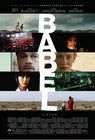
MOVIE REVIEW: Babel


There are moments of poetic beauty in Babel: two Moroccan boys standing on a rocky hillside fighting the wind; a deaf Japanese teenager navigating a rave; the dialogue between an American husband and the Moroccan tour guide talking about their families. Moments like these – and many more throughout the film – render these ordinary occurrences without the metaphorical weight that would drag down lesser works. The span of the film is maybe 4 or 5 days linking three stories connected by varying degrees of threadbareness and all involving some form of miscommunication or, perhaps, better viewed as incommunication.

I can understand that some viewers may find the trappings of the film’s conceit to be heavy-handed. I can also see how some may dismiss it all with a shrug. I fall somewhere in between. That these stories exist side by side and do not necessarily overlap is a strength. They all find their momentum without being informed by the other: two boys playing with a new rifle while they should be herding their goats shoot an American women traveling on a tour bus in Morocco; the Mexican caretaker in San Diego needs to travel to Mexico for her son’s wedding; a deaf teenager in Japan deals with her flowering sexuality and the recent death of her mother. The true magic in these stories is that we pick up their lives at the moments we are introduced to them and leave their lives the moment the arc ends. Previous events are hinted at. Fates after the fact are ambiguous. In between the camera of director Alejandro González Iñárritu treats each unfolding tale with such natural evocation of the essence of life, which enchants us with the minutia of a Mexican wedding celebration or the workings in a small Moroccan village.

That these ordinary events are made beautiful is no major feat. Artists of all stripes have acheived this throughout the ages. But to render these ordinary moments with such deftness, respect, clarity and realism is, well, extraordinary.

Friday, October 20, 2006

BASEBALL: I Blame the Towels


Watching Game 5 of the National League Championship Series between the Mets and the Cardinals, I noted, while observing the towel-waving fans of the Cardinals, that real baseball fans don’t wave towels. They yell. They clap. They make noise. They live and die with every pitch in the playoffs. They do not participate in gimmicky promotions. So what happens when I arrive at Shea Stadium for Game 7 of the NLCS? They’re handing out towels. Diamond Vision even urges everyone to “wave your towels.” They didn’t hand out towels for Game 6. Why now? Why would they do that? The Mets go on to lose a heartbreaker in Game 7.

The Mets had no hits between the second and eighth innings. No hits. Jose Valentin struck out with the bases-loaded and one out. Cliff Floyd struck out with two men on and no outs in the ninth. Carlos Beltran struck out – looking – to the end the game with the bases-loaded. The Mets’ offense humbled – twice in this series – by Jeff Suppan. That’s one I won’t live done anytime soon.

Endy Chavez’s amazing catch, robbing Scott Rolen of a homerun, is just a footnote now.

Of all the questions that will haunt me in the off-season the one that will give me nightmares isn’t Should the Mets have bunted instead of using Floyd as apinch-hitter but Why would the fans at Shea wave those towels? Why?

Monday, October 09, 2006

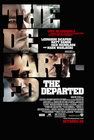
MOVIE REVIEW: The Departed


Here’s the nuts and bolts of Martin Scorsese’s new film, The Departed: Bill Costigan (Leonardo DiCaprio) is selected by the Massachusetts State Troopers to go undercover in Frank Costello’s (Jack Nicholson) Irish mob. At the same time, Colin Sullivan (Matt Damon) moves his way up the ranks of the State police to Staff Sergeant in a special investigations unit. Sullivan’s de facto father figure is Costello. So the police have a man in Costello’s ranks and Costello has a man in the police ranks.

The opening sequence sets up the contrasting paths of Costigan and Sullivan in excellent fashion. We see Costigan living a dank and violent life trying to insinuate himself into Costello’s crew and Sullivan’s quick rise to a position where he can exert some manner of control over how much information about Costello is known. Soon enough Costigan and Sullivan both earn the confidence of their respective organizations. And thus does the cat-n-mouse game of dual informants begin as both Costello and the police realize that there’s somebody on the inside.

The set-up is amazingly well done. The story, based on the Hong Kong movie, Infernal affairs (which I haven’t seen), is transplanted to modern day Boston. DiCaprio is excellent as the almost unhinged undercover man. Damon is strong as the all-business, ready to move up the ladder, eager beaver policeman with the hidden agenda. Nicholson’s performance is good too. He wasn’t as distracting as I’ve come to expect from him in recent years. I was half-expecting a hammy Joker redo, but that wasn’t the case. The supporting cast of Alec Baldwin, Martin Sheen, Vera Farmiga, Mark Wahlberg, Ray Winstone and, heck, even Anthony Anderson all do great jobs.

Scorsese’s directing lacks the stylistic signatures he exhibits in other movies. But he still wields a mean camera and even with the close-ups and still-standing camera, he soaks in every detail through the lens better than most in the business.

What The Departed lacks is pacing. While it never lags and keeps moving forward at a nice clip, the tension as Costigan and Sullivan close in on finding each other is almost nonexistent, outside of the final 20 minutes or so and a few scenes patched in the middle. Those final 20 odd minutes save the movie from being just another average cops and robbers movie. As new motives are discovered and concealed identities upturned, the whole thing climaxes with a frantic bloodletting that, in pure Scorsese fashion, is done with nonchalance and urgency. As the identities of Sullivan and Costigan become jeopardized, we see the real identity behind each character, which leads to more surprises and a nice twist concerning loyalty versus self-preservation.

Overall, I quite enjoyed The Departed. Tight story, some nice surprises to keep the audience guessing, and solid performances. I kept hoping for more white-knuckle intensity, which wasn’t sustained. Ultimately, it’s a few jabs short of setting up a knockout punch, but intriguing and clever nonetheless.

Friday, October 06, 2006

BASEBALL: Mets 4 - Dodgers 1


I attended Game 2 of the National league Division Series last night. A friend picked up some last minute tickets in the picnic area. All my years of going to Shea and I’ve never watched a game from our there before. We could only score single seating, which meant our seats weren’t located anywhere near each other. The security in the picnic area was out of control. Tickets are checked at every step of the way from section to section; from returning from the bathroom. We had e-mail printable tickets, which printed without the section number, which set some of the staff into a tizzy. We had called to verify the section and was told that it wouldn’t be a problem. But this one guy had to call in a “supervisor” even though I had an e-mail with the section number on it in addition to the printed out ticket. I understand it’s the playoff, the ushers and security have a lot going on but, Shea’s security is notoriously boneheaded. The picnic area situation just added to the general perception.

Barring that, the picnic area is a pretty neat place to watch a game from. It’s loud and raucous in its own way and the way the crowd noise from the stands echoes out, it feels eerily removed from the action. Eric and I started the game in our own seats. I was in the last seat in the top row closest to center field. It was a chilly night and the wind was whipping around centerfield, but I had my playoff orange and blue ski cap with me, so I was prepared.

And what a game! Glavine pitched masterfully for six innings. Another friend, Frank, in attendance somewhere in the mezzanine, texted me that “tonight's the night,” which is Frank-speak for a Mets no-hitter. Of course, just a few batters later, the Dodgers secured their first hit.

Endy Chavez was a great catalyst for the offense. He bunted his way on and scored. He singled. He later squandered a bases-loaded opportunity, hitting into a fielder’s choice, but Julio Franco legged out a potential double-play grounder to allow another Mets run. Small ball was the order of the day. Once again Willie’s handling of the bullpen and bench was superb.

Eric made quick friends with other fans in his section and they made room for me on their bleacher so I joined him after a few innings (the requirements I had to meet to secure a spot on the bleacher were 1. I was a Mets fan and 2. I wasn't fat. Two for two). There were some characters out for the game. We had Kowalski, a young man wearing camouflage thermals under his Mets jersey. The back was emblazoned with the name “Kowalski” and sported the number “69.” I couldn’t believe it. But, later, we saw an old guy wearing a “69” jersey. This must be in homage to 1969, right, and not something else (nudge, nudge, wink, wink)? I hope so. But back to Kowalski: he paraded up and down the bleachers waving a towel with a scowl on his face. If the crowd wasn’t standing, he implored us to stand. If we were standing, he was imploring us to do something more. I’m not sure what he expected. He also danced to anything that played. But he saved that special something for when Wagner came out. The scowl went perfectly with “Enter Sandman.”

There was also “Peanuts.” This very gregarious – and drunk – fan was the de facto mayor of our section. He clutched a bag of peanuts in one hand and a beer in the other. He also had a peanut skin on his tooth for the entire game. By the 8th inning a loving chant of “peanuts, peanuts” went out in his honor.

Fun fact of the day (from espn.com):

Glavine, who has 290 regular-season wins, defeated Hong-Chih Kuo, who has one victory. Here's a surprise: Not only was that not the largest differential in postseason history, but it wasn't even close. The "record" was set during the 1925 World Series, when Walter Johnson of the Senators (397-257 at that time) defeated Emil Yde of the Pirates (33-12).

Great time, great win, great seats for $30 at the last minute.

Only one more win until the LCS. Let's go Mets!

TEAMWORK/DREAMWORK

Sunday, October 01, 2006

MOVIE REVIEW: American Hardcore


Arriving at the theater to see American Hardcore about 10 minutes before show time, I found myself at the end of a long ticket line. The line was full of old people, so I knew that they were probably waiting for tickets to The Queen rather than American Hardcore. I went inside and found the automatic ticket machine. I punched in the movie title and show time. Due to some glitch in the machine, it spit out senior citizen priced tickets rather than the regular adult priced tickets. Fortunately, the ticket-taker didn’t notice the error, but if he had, I would have argued that by hardcore standards I was a senior citizen.

And it’s the youth and vitality that began the American hardcore punk scene that’s on display in American Hardcore, a documentary directed by Paul Rachman that chronicles the messy and chaotic beginnings of that scene, covering the years 1980-1986. Through interviews with key players and some very good live footage of such luminaries like Bad Brains, Black Flag, Void, SSD, among others, it does yeoman’s job of portraying this vibrant and underground scene.

American Hardcore’s narrative, if there is one, bookends the music from the beginning of Reagan’s first term to Reagan’s subsequent re-election in 1984 and, related to the actual scene, Black Flag’s break-up in 1986. The film is pushed along by live footage and interviews. There is no voice-over narrator illuminating any of the anecdotes told. For example, the straight edge movement is mentioned, it’s importance ascertained, but the why and where, for instance, that straight edge became so important is never expounded. There’s something laudable about the “either you get it or don’t” attitude, and I don’t mean that in any elitist way. The people who were there speak about what it was like. Their comments are buffered by the live performances. And that’s it. Just as the DIY hardcore scene today remains an “either you get it or you don’t” community of people who get it.

And I wish to emphasize that last part: there is still a solid and ever evolving DIY hardcore scene in America today. The movie ends with many of the people involved in the years of 1980-1986 as declaring that hardcore punk died. (The book, American Hardcore: A Tribal History by Steven Blush, a major source for this documentary, annoyingly declared the same thing.) I understand that, for many of the participants of those early, seminal bands, the scene lost it’s momentum after 1986, but for the film makers of a documentary that purports to chronicle this time to ignore the fact that hardcore continued and thrived after 1986 is, well, quite odd.

Of course, I know that hardcore continued after 1986. I went to my first hardcore show in 1986 - Corrosion of Conformity at the CBGB’s Sunday matinee. Later, in the early 90’s I would be in a hardcore band and also co-found a hardcore record label. (Disclosure: I am longer involved with the label, but it is still kicking and better than ever.) I don’t state this resume as a knee-jerk defense to declare, “Hey, hardcore was around for me too,” but to ask: why document the early era yet discount its impact? The reason why the Bad Brains, Minor Threat, Black Flag, etc. are as influential as they are is precisely because hardcore remained a vital instrument for so many after 1986. I’m not sure what sort of post-script there should have been, but it seems not only dismissive to American hardcore/punk community that rode the crest of that first wave as it is to those original bands to imply that what was accomplished dried up when they left the scene.

Just as the hardcore scene began as a response to the Reagan era and to the lame music landscape of the late 1970’s, the era that followed the years American Hardcore documents, began a as response to the violence and chaos of those early years. There was the Revolution Summer in D.C. and the Youth Crew scene in New York that, arguably, had an impact, for better or for worse, just as great as that first scene.

Ultimately, the flaws I find with American Hardcore, another viewer may see as virtues and vice versa. This fact is a strength of the film and of hardcore. I thought, for example, that at times that it got bogged down in cataloguing the scenes sprouting in different cities. There would be a city name and then quick clips of 4 or 5 bands playing. Another viewer may revel in the fact all these bands get face time, no matter how quick.

The focus lay mostly in L.A. and D.C., rightly so, with a healthy side of Boston. It also maps out the flag-bearers of New York, Texas, and the mid-west states. But there’s a strange disconnect of all this. After the third person or so comments about what was happening in Portland with Poison Idea, all we get, almost out of nowhere, is an amazing, albeit, too short clip of Poison Idea playing. There’s no further discussion as to why this band from Portland became the band that everyone else cites. Just that all too quick clip featuring Poison Idea bursting into song – with an almost svelte Jerry A and Pig Champion to boot. Some more insight into the actual personalities that made these years so amazing may have worked better. And I’m not talking about the Ken Burns treatment – though I would have like to have seen some more still photography featured – but to simply get into a few of the band’s heads a bit more. Obviously, I understand the idea to give as many bands their due and not all can be given justice but here’s an omission: no Dead Kenndys mention whatsoever.

Essentially, there’s too much fertile ground in those six years to include everything. In fact, Black Flag and Bad Brains could probably use their own documentaries. But some of the stuff seemed to come out of left field. For example, we see a member of Flipper saying, incredulously, about how some guy Moby once said in an interview that he sang for Flipper. Cut to Moby, who explains that the singer of Flipper was in jail and he filled in for two shows because he knew the words. There’s no framing for that anecdote, and no further discussion about it. Why is it there? Is it accusing Moby of lying? If it was there to explain about the happenstance and chaotic nature of the scene and how others pitched in to help bands work it failed miserably. It didn’t even work as comic relief: “Moby sang in my band? I don’t remember that.”

But these quarrels with the movie are my own. Anyone remotely knowledgeable with the hardcore scene will have his or her own catalog of flaws. And, while I may be critical of these flaws, it doesn’t mean I thought the film wasn’t well done. I was entertained throughout and happily soaked in all the music and images. I suppose, due to my somewhat anal-retentive personality, that I fully support making order out of chaos of the birth of hardcore. I understand the importance of archiving and documenting the years that preceded my own involvement in the scene.