Monday, December 31, 2007
Movies 2007 Roundtable Spectacular
Part III: Audience expectations and Am I a movie snob?
Click here for Part I of this roundtable
Click here for Part II of this roundtable
I’ll follow Colbinski’s format:
The Best
No Country For Old Men
Highly Recommended
An Unreasonable Man
The Host
Brand Upon the Brain!
Paprika
The Bourne Ultimatum
In-Between Days
Lust, Caution
There Will Be Blood
Recommended
Zodiac
300
Hot Fuzz
SiCKO
Harry Potter and the Order of the Phoenix
Superbad
Eastern Promises
Good but Flawed
Ocean’s Thirteen
Time
Juno
Stardust
3:10 To Yuma
Disappointing
Grindhouse
Spiderman 3
I am Legend
In my previous post I forgot to add Stardust as disappointing me. For much of the same reasons you list. (Although I call it the Hollywoodification of movies rather than the Hollywoodization.) Nevertheless, Stardust and 3:10 to Yuma make the Good but Flawed list rather than Disappointing because I did enjoy both. They just could have been so much better – if they trusted the source material and if they didn’t have to subjugate themselves to the lowest common denominator, poll-tested type of studio movie-making. Back to Stardust. Neil Gaiman is my favorite author and the ending of Stardust (the book) portrays exactly why he is a master story-teller. The bombastic, predictable ending tacked on is the problem with Hollywoodification. Just as the sugary ending to I am Legend is problematic.
I understand that many people want to "feel good” leaving a movie theatre but are they really that stupid to be fooled time and time again by lack of originality in Hollywood endings. Which is one reason (of several) why No Country for Old Men is the best movie of the year. I remember talking to you after reading the book and mentioning how they can never make a movie that does justice to the book. But they did. They did superbly. So much that happens is opposite of how it happens in Stardust and I am Legend. Everything isn’t spelled out for the slow-witted. Plot isn’t contrived to bring us to a climax. In fact, we can probably argue over what is the climax of No Country or if there is one. Now No Country had the strength of source material written by one of the greatest living American authors and a screenplay by two brilliant filmmakers. It worked because of this. Some movies can have nice and tidy endings – even happy endings – and be great and satisfying. Although looking over my Highly Recommended list I see that none of those movies really have happy endings and in movies like Bourne and In-Between Days the story doesn’t exactly wrap up – you leave knowing there’s more to tell as the credits roll.
This begs the question “Am I a movie snob?” I say no although I have been accused of being such especially after passing up opportunities to see something like Adam Sandler’s latest (“He’s gay! With the King of Queens!”) In looking at the Top 10 highest grossing movies of 2007 I have seen five of them and I will see The Simpsons Movie one of these days. So I will have watched more than half of the most popular movies put out this year. Hardly snobbish behavior, I’d say. (Now, having declared myself non-snobby I need to ask who are these people going to see Wild Hogs?) I look forward to serious, artsy, and foreign films. But I also like lowbrow stuff. We grew up watching Saturday afternoon kung-fu and B-monster movies. We’ve seen many of the movies shown on Mystery Science Theatre 3000 on their own. I just try to reject the middlebrow. I get no satisfaction from it. It’s worse than mindless entertainment. It’s insulting. I think the problem is that good, enjoyable cheesy movies aren’t really made much anymore. So I veer toward highbrow. So if I am snobbish it is due to attrition rather than any inherent movie-viewing habits.
I like to think this has to do with audience expectations. Audiences expect movies to be sugar-coated and mindlessly predictable so they show up. It’s not what they want, necessarily, but they have just bought into what Hollywood does. Since they show up Hollywood interprets this as them wanting exactly what they have been putting out. Am I giving audiences too much credit? I think audience expectations partly explain the laughter during No Country. The movie had some funny moments to be sure. But other times I think certain members of the audience were expecting something different. Perhaps, they were expecting a scene to veer off into Fargo or Big Lewboski territory and they laughed prematurely. They expected No Country to be a Coen movie. While it certainly was it was also a Cormac McCarthy movie. So they were looking for laughs in the wrong places. Like No Country, there were some funny scenes in There Will be Blood. (Both movies do not have funny ha-ha scenes but rather scenes that elicit laughter as a way to break the tension found through each movie.) I recall most of the laughter in There Will Be Blood as coming when the young preacher was on-screen. I took it more as a liberal NYC audience laughing at the backwards, Jesus freaks. But I could be wrong.
Enough for now. I still want to talk about watching Brand Upon the Brain! as a live movie (best movie-going experience of the year) and The Bourne Ultimatum (best action movie ever). Also I want to compare two movies about teenagers – Juno and In-Between Days – which I am sure will bring out certain snobby prejudices I have against "American Independent” cinema.


Sunday, December 30, 2007
Movies 2007 Roundtable Spectacular
Part II: Books to Movies - Trust the Source Material
Click here for Part I of this roundtable
No Country for Old Men was also the best movie I saw this year. It’s about a near flawless movie that one can see. There are no missteps, the acting is top-notch across the board, and the unfolding of the story is paced to perfection. I remember when No Country, the novel was released, and reviewers called it Cormac McCarthy’s “most cinematic” novel. While that may be true when compared to his earlier works, after I read No Country I didn’t know how a movie would work without changing the core of the book – sure the plot of found drugs by an everyman and the trouble that ensues is great movie fodder, but plunging the depths on the page, I thought, would be almost impossible. The Coen Brothers pulled it off superbly. It’s sound odd, to me, to say that, No Country is a “risky” movie, but compared to other adaptations this year it is, well, risky to stick so closely to the source material, especially when that source material challenges the viewer and assumes we’re actually paying attention to every frame. The greatness of No Country is that from the opening voice-over, I had no other choice than to be riveted to every scene, every camera movement, every word spoken and, as the characters here are a taciturn bunch, unspoken.
No Country was a great movie because it stuck to the rich source material and didn’t alter the ending in such a way to make a nice tidy conclusion. Here’s two movies that I did like, but fall short of the source material especially in the use of their endings: I am Legend and Stardust. I fully understand your qualms with I am Legend and agree with all your points. But, perhaps my expectations were lowered by having read the story beforehand and watching the trailer and giving up the hope of any similarity outside of the premise of the last man being plagued by the undead, that I found myself enjoying the movie. The climax was rushed and the ending way too sugar-coated, but, after reflection, there were enough worthy scenes to justify my being entertained by it. I actually really want to dislike it for various stupid plot-points, but find myself unable to. I can’t justify it, as I totally recognize its flaws and have no counter to your arguments. How it tied the title to the ending was clunky – especially considering the brilliance of the meaning of the title from Matheson’s novel.
Stardust is an enjoyable, quirky fantasy, but how I wished it stuck more closely to the ending of the Neil Gaiman/Charles Vess story. Rather, it opts for special effects and Hollywood explosions instead of the quiet and beautiful and heartfelt ending. How richer would Stardust be with that ending – the journey of Tristan loses it’s full meaning within the bombast of the noisy, silly, typical ending. Stardust could have been a triumph of the fantasy movie genre instead of just another well-done but by-the-books Hollywood style extravaganza. I should note that the bits lifted directly from the book are the ones that caused the film to better than average. The Hollywoodization of the story dragged it down. Trust the source!
300 trusted its source, panel for panel at times, and turned out to be a rousing blood bath. Harry Potter condensed too much and the plot seemed too rapid fire at times to be as great as the previous two HP installments. Those two trusted the source but added and took away as needed - there's a fine balance to be had, of course. Beowulf added and subtracted as needed and it was fun to watch, especially in 3D, but that capture-motion animation doesn't work for me and the android nature of the actor's features prevented it from living up to the epic status of the Beowulf story.
You didn't like 3:10 to Yuma, but I was pleasantly surprised by the Western I did see: Seraphim Falls. It was released almost a year ago and is, in my opinion, an overlooked gem of the past year, especially when considering that Westerns like Yuma are viewed as part of a western revival of sorts.
A few questions for you, Nimero: what do you make of the odd laughter in the theater during No Country? Are audiences made uncomfortable by the story? Are people expecting another Big Lebowski that they think they're supposed to laugh at certain parts? Of course there's some morbid humor in the film, but the Funny HaHa reaction is strange? (I suppose this may apply to There May Be Blood as well where the same odd laughter happened at certain points.)
And, why are good comedies so hard to find? Knocked Up was the Most Overrated Movie of the Year followed closely by Waitress. Only Hot Fuzz really made me laugh. (And Brand Upon the Brain, but to pigeon-hole that film as "comedy" does it an injustice.)
Finally, in the interest of full disclosure, here's a list of what I did see this year, ordered, somewhat, according to preference.
The Best
No Country for Old Men
Highly Recommended
Eastern Promises
There Will Be Blood
The Host
Lust, Caution
Seraphim Falls
Brand Upon the Brain!
Away From Her
Zodiac
Recommended
An Unreasonable Man
Hot Fuzz
300
Year of the Dog
Beowulf
Tears of the Black Tiger
Good But Flawed
Stardust
Death Proof
Harry Potter and the Order of the Phoenix
I am Legend
The Hoax
Disappointing
Knocked Up
Spiderman 3
Waitress
Stephanie Daly
Saturday, December 29, 2007
Movies 2007 Roundtable Spectacular
Part I: Nimero's Best of the Year and Biggest Disappointments
Rather than having Colbinski or I list review capsules of our Top Movies of 2007 as we did last year (here and here) we will just talk about them. This is due partly to us both seeing between 20-25 movies each this past year. No sense in making a top 10 list when it encompasses half of the movies viewed. I am going to begin by talking about the best movie I saw in 2007 and also list what I consider to be the year's biggest disappointments.
The best movie I saw this year was No Country for Old Men. This is how you adapt a great book into a great movie. The very minor differences between book and film do nothing to take away from the power and spirit of the original story. In fact, the film version’s truncated ending may be more powerful. Three parallel stories of three men all linked but hardly ever on-screen together. The story of a man who finds drug money and is followed by a killer and a sheriff unfolds slowly but is paced perfectly. I’d recommend reading the book before viewing as it helped me appreciate how well the story was put on the screen. But on its own it is still a great movie.
Great movies are lacking this year from my perspective. Most critic lists this year mention how great a year it was for movies. This makes me want to go see what is on their lists. For me, it was a year of disappointing films. Grindhouse, Spiderman 3, 3:10 to Yuma, and I am Legend all disappointed greatly. Spiderman 3 is the biggest disappointment of 2007.
I like comic book movies. Especially good comic book movies. I liked the first two Spiderman movies. I like Sandman as a villain (in the comic). I was a bit worried because I never liked Venom and I wished the first two movies dealt with Harry Osborne. But I never thought it would result in this muddled mess of a movie. Rather than me rehashing all that’s wrong, just read Colbinski’s review.
Grindhouse was interminably lackluster. And I watched each section – Planet Terror and Deathproof – separately on DVD. I cannot imagine watching this tripe for more than 3 hours in one sitting. Perhaps a theatre would be more enjoyable for these movies, which was supposed to be a homage to 1970’s B-flicks. But it’s doubtful. Tarantino and Rodriguez are essentially both B-movie directors with a slick camera style. They just aspire to be something more and sometimes actually do. But, boy do they fail when they actually try to create B-movies. Talky, insipid, and boring are the only way I can describe these films. I expected fun from these movies and experienced exactly the opposite.
3:10 to Yuma was a good movie. But it could have been much better. It could have been a great western. But then a middle that should have been trimmed and an ending that doesn’t match up to the rest of the movie nearly over take all the good points. Great performances by Russell Crowe as the bad guy and Christian Bale as the reluctant hero salvage the movie.
While watching I am Legend I fell into too many plot holes. Because it is a recent release I won’t go into details for fear of mentioning spoilers. Let me say that I know how to suspend belief. I have no problem suspending belief. I don’t consider this nitpicking. A film must be consistent and believable in the world it creates. Too much about everything in this film is contradictory. A movie about the last man in earth surrounded by human killing vampires is right up my alley. I wanted to like this movie a lot but just couldn’t. When will Hollywood realize that consistency and tension is better than chase scenes and special effects.
Let’s see what Colbinski says about this or anything else. Next up I’ll respond to Colbinski and also talk about other movies I liked including maybe the best action movie ever and my favorite movie-going experience of the year.
Friday, September 07, 2007
Tempting Fate in Tokyo
On a recent trip to Hong Kong and then Japan I was surprised at how well my body stood up. Jetlag was not a factor as I quickly adjusted to the new time. I was expecting some problems from eating the local cuisine, as is my custom when I visit foreign places. For the most part I stayed regular. It was only towards the end of my trip that my bowels loosened. Not diarrhea, per se, but not as solid as I prefer. Only once did I have what could be considered an emergency and it was partly of my own doing.
I just finished eating with a friend who lives in Tokyo. We went to a local neighborhood establishment and had what he described as “bar food”. It consisted of various types of sashimi (some still with the entire fish), various cooked fish, some noodles, and an order of chicken wings. It all went down well with some Kirin beer. He had to go take care of some family business so I went to walk around the Shibuya area. (An anecdote from that walk-around can be read here)
After my walk I made my way back to the subway to go back to my hotel. As soon I got onto the subway car I started to feel cramps. Sharp twinges deep in my abdomen mixed with a roiling in my stomach. It meant trouble. I took the worn subway map out of my pocket to count the number of stops I had left. As the rumblings continued and the cramps grew I tightened my body against any unwelcome (and unexpected) expulsions and continued to count the subway stops. As clean, efficient, and outstanding Japan mass transit had been the entire trip it certainly was not going fast enough for me now. My eyes bore a hole in the subway map in attempt to get me to my destination quicker.
Finally! I was there. The crowded car emptied and I waited my turn and exited briskly without shoving any Japanese passengers out of the way. Even at a moment like this I did not want to be pegged as the “ugly American”. I was walking briskly yet awkwardly. My butt cheeks were clenched together providing me with a stiff-legged gait. I held my hand to my side in a further effort to control this gastric disturbance. This station, which was directly across the street from my hotel, was large. I had a ways to walk and an escalator to navigate before I would be outside. I thought of just making a beeline to the station restroom. Public restrooms in Japan weren’t nearly as filthy and disgusting as the ones in New York. I reviewed my options. My hotel had a “super toilet”. It comes equipped with a seat warmer and bidet and spray options built within. Very nice. Better than the comfort of my own home.


In the stalls in the station there is no toilet. Rather, it is like a urinal is placed horizontally and lowered into the ground. A person is to stand above this and drop the kids off as it were. I could either use “super toilet” or a porcelain hole in the ground. As I felt this movement was going to be a bit too sloppy to be standing during its occurrence I was determined to get to my hotel room.
I exited the station and got lucky with the crossing signal. It was flashing, indicating it was to change any second, but I picked up the pace, and throwing caution to the wind I unclenched my butt cheeks, and jogged across. Boy, now I felt better. Whether it was unclenching or the bouncing I do not know. While I was still feeling something I wasn’t cramped up anymore and I allowed myself a leisurely, unclenched walk. But this newfound confidence almost did me in. I get into the elevator and push the button for my floor. I begin to realize that I would like a drink. Wouldn’t you know it: there was a vending machine directly outside the elevator. Now, I should state that I wasn’t looking for a mineral water or a soda. I meant a drink as in alcohol. Beer happens to be sold in vending machines in Japan. I was so happy with this that I felt compelled to buy a beer every time I passed one. As the elevator glided upward I stuck my hand in my pocket to see how much change I had. Not enough for a beer. I liked the Asahi for 350 Yen. But I did have a 1000 Yen bill.
I exit the elevator and take the few steps to the side and stand in front of the vending machine. On the elevator ride up I was starting to feel cramps again. Despite this, the feeling of having conquered (or at least controlled) my body’s natural functions left me thinking I could take a couple moments to get a beer. More likely it was just laziness as who wants to leave their hotel room and walk 100 yards down the hall again when I was passing the vending machine right now. Either way I was tempting fate.
All it would take is giving the machine money, having a can of beer shoot to the retrieval den at the bottom, grab my change, and walk down the hall. Easy as pie. I inserted the 1000 Yen bill. No problem. I press the button for my desired beverage. Everything is O.K. except the rumblings are coming back. The can arrives at its designated location. I bend to pick it up. Rumblings some more. Clenching begins again. I don’t hear any change coming out. I look at the machine. There is some Japanese characters lit up in green and next to it in red it states 650. Under pressure from the cramps that are getting progressively worse I quickly deduce that the machine is not giving change and I still have 650 yen to spend. I make a decision and press the Asahi button again. Another beer in the retrieval den below. The green light stays lit and it now reads 300. I don’t have enough for one more beer but then I lose 300 Yen. I am now jumping up and down in front of the vending machine like a little boy on Christmas morning. The jumping either takes my mind off the fact that I am seconds away from soiling myself or actually works to prevent the aforementioned soiling. I dig into my pocket and come out with a 50-yen coin. I place this in the coin slot and hit the Asahi button again. The third beer comes out. I grab it and race off down the hallway, hopping stiff-leggedly (the jumping seems to help) and juggling three beer cans. I continue hopping around anxiously as I have to balance the beer cans and find my hotel key.
The key goes into the door and I enter. In one fluid motion I drop the beer on the bed as I undo my belt. In a flash I am in the bathroom looking at “super toilet”. I am jumping like mad as I try to lower my pants. The anticipation is killing me. The cramps increase in magnitude and duration. My stupid mind relays to my body the proximity I am to the toilet and I can feel myself emptying. Oh, god, why did I get those beers. Finally, I am turned around and get the pants lowered. The warm toilet seat isn’t the only relief I feel.
Tuesday, September 04, 2007
Elusive Sushi Search in Tokyo
Nighttime in Tokyo. I am walking in the Shibuya area. The bright lights bathe me as I people watch and peer into various storefronts. I allow myself to get lost. I follow small groups into alleys and side streets. I pass the love hotels and strip clubs. I observe the kitchen workers and delivery boys smoking at the back doors of their shops. I notice dance clubs with pictures of people I don’t recognize in hip-hop poses. But as a universal sign of their exclusivity, the front doors of these clubs are barred by velvet ropes and beefy black bouncers looking serious with crossed arms.
Occasionally I pop out onto a main street seeing the neon glow before I actually get there. It is on one of these main streets I see them walking in my direction. An American couple. College aged, maybe mid-twenties. Like the typical frat-boy he walks with arrogance and she has the blond demeanor of a cheerleader who has reluctantly given up the pom-poms. Holding hands they walk abreast down the sidewalk not seeming to notice anything around them.
“Hey buddy, you speak English?” he shouts at me.
Bewildered I respond that I do speak English. I don’t dress out of an Abercrombie & Fitch catalogue but I do think I still look decidedly American.
“Know any good sushi restaurants around here?”
“No”
Astonished and frustrated he lets out, “You don’t?”
I am annoyed at his frustration. I laugh at his astonishment. “I’m just visiting, man.”
“So are we” the girlfriend chimes in.
Still holding hands with her, he walks both of them in a circle forming a little arc as he looks up to the Tokyo sky. No directions to a good sushi restaurant are forthcoming from the neon lights.
“Just walk around and go into one that is crowded with Japanese people,” I offer. I recall how unapealling a conveyor belt sushi restaurant full of non-Japanese people looked to me earlier in my trip.
He makes a sound that confirms he heard me but that he doesn’t think much of the advice.
I leave them in their desperate search for a good sushi restaurant in Tokyo. I spot another alley I have yet to explore. I duck down it leaving the bright lights behind me.
Saturday, July 28, 2007
BOOK ROUNDTABLE (Entry 6): Harry Potter and the Deathly Hallows
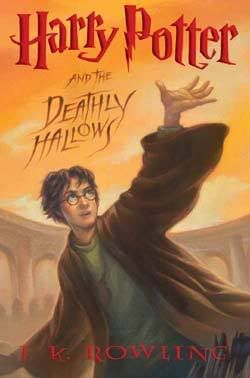 SPOILERS. Colbinski and Nimero are engaging in a back-and-forth discussing the final Harry Potter book. All matters in the book will be discussed. SPOILERS
Click here for Entry 1 of this Roundtable
Click here for Entry 2 of this Roundtable
Click here for Entry 3 of this Roundtable
Click here for Entry 4 of this Roundtable
Clickhere for Entry 5 of this Roundtable
Well, Harry rightly recognizes Sanpe’s contributions giving his son the name Albus Severus, “named for two headmasters of Hogwarts…[Snape] was probably the bravest man I ever knew.” I’m sure the wizarding world in general also recognizes as much. However, how brave would Snape’s path have been if Neville was the “Boy That Lived”? Snape would be without his anti-James Potter inclinations, but, on the other hand, he would be without his love for Lily Potter to keep him straight too.
I must say, after Harry’s victory, when he ascends to the Headmaster’s office, I hoped that Snape would pop-up in one of the portraits, though having died moments earlier, I knew it would be unlikely. But as Harry names him as a headmaster to his son, I would think he now has a portrait in that office despite the fact that his ascension to headmaster was due to, well, his killing Dumbledore, and the Death Eaters taking over the Ministry. (No way that Umbridge has a portrait!)
The Harry Potter series, as a whole, did not disappoint me. I wavered after book 2 back when it was published, but after seeing the film adaptations for books 3 and 4, I re-visited the stories and have been hooked ever since. I look forward to a few years from when I can read these to L.R. That will be a magical experience.
Wednesday, July 25, 2007
BOOK ROUNDTABLE (Entry 5): Harry Potter and the Deathly Hallows
SPOILERS. Colbinski and Nimero are engaging in a back-and-forth discussing the final Harry Potter book. All matters in the book will be discussed. SPOILERS
Click here for Entry 1 of this RoundtableClick here for Entry 2 of this Roundtable
Click here for Entry 3 of this Roundtable
Click here for Entry 4 of this Roundtable
One quick note about Snape before I leave for a few days. While I rightly predicted that Snape was a “good guy” and killed Dumbledore on orders by him I was wrong about the specifics. In Book 6, we watch Snape conduct an Unbreakable Oath to kill Dumbledore. Because of this I thought that Snape made Dumbledore an unbreakable oath to stay loyal. It’s important to note that Snape hade to take that oath in order to kill Dumbledore and appear loyal to Voldemort whereas he stayed loyal to Dumbledore and Harry not through wizardry but love for Lily Potter. Colbinski, in the period between the ending of the book and the epilogue do you see Snape not only being redeemed but recognized as one of the most powerful and capable wizards ever?
Tuesday, July 24, 2007
BOOK ROUNDTABLE (Entry 4): Harry Potter and the Deathly Hallows
SPOILERS. Colbinski and Nimero are engaging in a back-and-forth discussing the final Harry Potter book. All matters in the book will be discussed. SPOILERS
Click here for Entry 1 of this RoundtableClick here for Entry 2 of this Roundtable
Click here for Entry 3 of this Roundtable
I thought Harry as the last Horcrux was handled deftly. Firstly, it allowed Harry to sacrifice himself and have Voldemort kill one of his own Horcruxes. Secondly, it allowed hope in the resistance seeing that Harry wasn’t dead – again. Finally, despite the buildup, especially as seen in Book 6, it allowed Harry to defeat Voldemort without having to kill him. Harry never casts the killing curse. He takes the wand and Voldermort own spell used against Harry is what does him in.
I was disappointed in the epilogue precisely because it was only a snapshot and therefore seemed inadequate considering the world that has been created in the previous seven books. I don’t envision a wizarding utopia with goblins marrying mudbloods but, like you, I would like to see more of what happened in the aftermath of Voldemort’s demise.
The answer to how Neville could retrieve the Sword of Gryffindor from the Sorting Hat is the same reason that Harry did in Book 2 and how Ron grabbed it out of the pool in this oone (and the reason why you cheered Neville on). Only a Gryffindor with “daring, nerve, and chivalry” could retrieve the sword. Neville displayed he was a true Gryffindor and was thus rewarded. It also showed that the sword belongs to Gryffindor and not to goblins. (I’d like to see Harry explain to Griphook how the sword ended up back at Hogwarts without ruining wizard-goblin relations.)
I will be away camping for the next several days. I’ll address additional comments and questions upon my return. In the meantime I’ll leave you with this final thought: I would have liked to see the rest of the wizarding world fleshed out even a little bit. After the attack at the Fleur-Weasley wedding I expected some retaliation from the continental or, at the very least, the French wizards.
BOOK ROUNDTABLE (Entry 3): Harry Potter and the Deathly Hallows
SPOILERS: Colbinski and Nimero are engaging in a back-and-forth discussing the final Harry Potter book. All matters in the book will be discussed. SPOILERSClick here for Entry 1 of this Roundtable; Here for Entry 2
Harry, Ron and Hermione needed to know about the Hallows, they didn’t need to find them. It’s the knowledge of them that’s important and the knowledge jobs go to Hermione. The wand-lore and who disarmed who and it’s the wizard and not the wand and all that jazz (I can’t say I found that talk interesting or easy to follow) all plays into the myth of the deathstick or Elder Wand. Our heroes needed to know about the Hallows. To defeat Voldemort - and the Horcruxes – they had to understand what the old fiend was up to. Like I noted, the Horcrux v. the Hallows was an intriguing development. It also symbolized the differing quests Harry and Voldemort were on: one of self-sacrifice, the other for ultimate power.
Speaking of Horcruxes, I thought it would be dumb for Harry to be one of the final Horcrux. I thought the revelation of that was handled well. Sort of. But let me get this straight: all those years ago, Lily’s charm – her love for Harry – rubbed off on Voldemort at the same time Harry was implanted with part of Voldemort’s soul thus making him a Horcrux. Huh? Combine this with the wand business and the final confrontation is a calculus question and not an epic battle of good and evil.
Your observation about wizards, goblins, and elves fighting and suffering together is acute. Just as Rowling complicated Dumbledore past the Gandalf imitation he appeared as in the early books, I enjoyed the complicated relationship of “good” wizards with Goblins. The history is murky and from what we know it’s one which bad blood carries through the generations. How does Voldemort’s defeat impact these various magical creatures? Since Voldemort wanted to purify the magical world, my optimistic self sides on the fact that a new dawn has risen after this book.
Apparently, in that dawn Ron learns to do Muggle stuff like drive a car. (Remember, Mr. Weasley loved Muggle machines, so it’s not so farfetched.) On one hand I enjoyed the snapshot – and the epilogue is nothing if not a snapshot showing one morning 19 years ahead with no preamble or afterward – portrayed. It implies a simple and decent life for our trio. But we don’t know how simple. Perhaps, Harry is the head Auror and Hermione is the head of the Ministry of Magic. I don’t know. That’s part of what made it a satisfying epilogue. I just wish there was an immediate aftermath chapter that fills in some post-Voldemort developments.
I’ll leave you with a head-scratcher: the last we see the sword of Griffindor, the Goblin escapes with it but yet Neville finds it in the burning Sorting Hat (add it to the death list?) to destroy the snake Horcrux. How’d he get that sword? Wizard’s property laws are magical? Nonetheless, Longbottom screaming “Dumbledore’s Army!” while going one on one with Voldemort left me cheering.
BOOK ROUNDTABLE (Entry 2): Harry Potter and the Deathly Hallows
SPOILERS. Colbinski and Nimero are engaging in a back-and-forth discussing the final Harry Potter book. All matters in the book will be discussed. SPOILERS
Click here for Entry 1 of this Roundtable
I agree with Colbinski that it was an impressive and entertaining read. I do have some quibbles to be addressed, though. Both with Colbinski and with the book overall. While the story does move briskly and Rowling has an uncanny ability to end each chapter with you wanting more, there is a tendency for the story to flag a page or two into each chapter. Then the chapter picks up again, some action occurs usually preceded by helpful exposition, and then off to a humdinger of an ending.
It works. It works well. But looking back over the book there’s too much. Too much close calls. Too much of teenagers defeating adult wizards who in later scenes we see dueling evenly with other accomplished wizards. I would have been happier with spending time with the quest rather than it becoming a chase story. I agree about the Umbridge sidetrack. Umbridge is never mentioned again. Was she a Death Eater or just a loyal ministry bureaucrat? Her name isn’t mentioned during the Battle of Hogwarts so I suspect the latter although she seemed too gleeful about torture not to join, no?
I have no quarrel with how much face time Snape received. The “Is Snape good or bad?” question was one of the most important going into this book. Keeping him off the page and out of the action was wise. It did not become a distraction to attempt to parse all of Snape’s actions into answering that question. In fact, the answer to this question was about the only correct prediction I had concerning this book.
It is a very clever book set up nicely by its predecessors. Snape is explained cleverly. Sharing Dumbledore’s wisdom is clever. Having house elves and goblins we meet earlier in the series play roles is clever. I’m sure if I reread all the books at once I will see even more connections and foreshadowing (Colbinski already points out the Dumbledore trading card). One area that Rowling was not clever enough was the gifts left to Hermione. Hermione is constantly reading the book left to her by Dumbledore but I’m not sure any useful information is gained from it. She notices the Deathly Hallows sign in the book which leads them to Harry’s birthplace and then to the Lovegood house. As Dumbledore wanted them to be looking for Horcruxes and not the Hallows this obviously wasn’t the information he intended her to glean. So what was the purpose of the book to Hermione? Am I missing some other information it provided?
My biggest criticism is the epilogue. Partly because I never approved of the Harry/Ginny connection I didn’t really care to see them married with kids. Mostly because it was just too tidy. The small glimpses we see are the characters as we know them from the seven years the books cover only now with kids. There’s no insight to the effect of the world on them for the past nineteen years. They are living as you would imagine them living if Voldermort never returned and everything went swimmingly during their time at Hogwarts. At the end of the Battle of Hogwarts it is noted how wizards of all ages and Houses and bloodlines were sitting together with elves and centaurs. The scenes with the goblin and house elves intimated that there may be integration of all magical creatures throughout the wizarding world. Did that happen? Was the Minstry of Magic still a useless governmental agency or could it now affect change? I was less interested that Harry’s kid didn’t want to be a Slytherin than the fact that Hogwarts still held different Houses. I wanted to know if house elves were liberated or if goblins could use wands. I know the epilogue is there to put to rest any talk of Voldermort not being dead or a way to stop any further Harry adventures. But it seemed pointless. The last two sentences of the epilogue would have worked as well, if not better, as the last two sentences of the final chapter.
Monday, July 23, 2007
BOOK ROUNDTABLE (Entry 1): Harry Potter and the Deathly Hallows
SPOILERS. Colbinski and Nimero are engaging in a back-and-forth discussing the final Harry Potter book. All matters in the book will be discussed. SPOILERSOverall, I was impressed with Harry Potter and the Deathly Hallows. With few exceptions it moved briskly and, as always, Rowling is a clever plotter, with even the most predictable plot points always seeming fresh when finally unveiled.
The quest set-up, as opposed to the Hogwarts school year set-up, worked well. Unfortunately it meant that meant that secondary characters waited in the wings until the final turn. This limited how much of the Hogwarts staff and students we see. It’s almost criminal how little time Snape gets, especially so when we find out how freaking important Snape is to Harry’s victory!
Before my questions and/or criticisms let me start with a device I liked: Harry & Company’s search for the Horcruxes contrasted with Harry’s vision of Voldemort’s quest, for what he would find out, is the Elder Wand of the Deathly Hallows. Harry had no idea what Voldemort was up to, and Voldemort had no idea that Harry was active and not just “in hiding.” Voldemort’s hubris is on full display in this volume and it all fits into his path of resurgance – he thought the Horcruxes were safe; he knew nothing past the obvious about the Hallows; he knew nothing of how elves could travel.
That last point struck me as somewhat of a cop-out: Dobby to the rescue! Perhaps it’s because since book 2, I’ve found the elves we’ve met, Dobby and Kreacher, to always be plot contrivances. Here, they do the same: Kreacher provides important information about the Horcrux locket and Dobby dies a hero. On the most part, I delight in Rowling’s ability to re-introduce and rehash characters and events; I just have no patience for these house-elves. Dobby death was more annoying to me than gripping.
OK, let’s get to the other deaths: Mad-Eye’s death was a wonderful red herring. It happens early and I’m sure every reader thought there was a chance he would come back. Fred’s death was inevitable – by inevitable, I mean that at least one Weasley had to perish. Lupin and Tonks’ deaths were oddly off-screen. I suppose that makes sense – Harry would have been too distracted upon seeing those deaths and that whole Battle of Hogwarts scene was through his eyes. Snape dies as soon as he enters the action. But I did like that he dies without anyone knowing what he did only to be appreciated after the smoke clears. It’s a shame that the epilogue didn’t deal with the immediate ramifications of these deaths and the wizarding world in general.
Dumbledore’s back-story was executed with grace and intrigue. Again, Rowling takes a story we learn from a collectible card in book 1 and turns it into an important event. I, of course, speak of Dumbledore and Grindelwald’s duel.
Dumbledore was all over this story in a good way. Another excellent red herring was the blue eyes in the mirror shard and I enjoyed the Aberforth storyline. Was the bartender as Hog’s Meade ever identified before?
Two major criticisms: Ron’s contrived leaving and returning with news he slowly remembers over the next few chapters. I wish Rowling found a better way for Harry, Hermoine and Ron to get information while laying low.
My second criticism is that Umbridge ended up with the locket. I could have done without the whole Ministry break-in. The break-in to Gringrotts would have sufficed.
I'll leave it here for now. I haven't even mentioned Neville's kicking ass or the convulted wand-lore that hurts my head when I think about it too long. For now, I'll turn it over you, Nimero.
Saturday, July 14, 2007
MOVIE REVIEW: SiCKO
 Do not view Michael Moore’s new documentary SiCKO, as an encompassing argument against the U.S healthcare system. As its title indicates the main purpose is to show what is wrong with said system. On that it does an admirable (if not easy) job. There is no argument because, other than clips of politicians praising new health policy, this documentary shows no defense for U.S. healthcare. And what it does present is not nuanced or multi-layered, as is Moore’s wont.
 There is barely a mention of American exceptionalism or the history of volunteerism that has guided the U.S. healthcare system to its current paltry state. It does not mention that throughout the years labor unions have been as much to blame as the AMA for preventing any type of national healthcare from moving forward. It bandies about the terms “socialized medicine” and “national health care” without definition or context. This is especially true in the second half of the movie when the focus shifts from what’s wrong with the American way to what’s right with the healthcare systems of Canada, Great Britain, France, and Cuba. All the glories of these systems are presented but not how these systems work. Despite these failings it is still an enjoyable and good film.
If every American saw this film I have no doubt a healthcare revolution would occur. But because it offers no solutions (“other countries do it better and cheaper than we do” is not a solution) I would fear that the American people would accept any change whether it is better or worse than the current system. SiCKO makes a strong case that change is necessary but then offers no specifics on what that change should be or how it should come about. SiCKO (and most other media outlets) makes it appear that the choice is either the current U.S. system or a universal payer national system. There are no alternatives to these broad brushes mentioned even though the four countries presented as antithesis to the U.S. all have systems that differ from each other. Which one should we emulate? A professor of mine, who has studied U.S. and international healthcare for many years, once stated that the U.S. would be best off if we went more towards the French system. From my Health Policy class I took with him, I am inclined to agree but you could never come to that conclusion from watching SiCKO.
I suppose this is my biggest problem with SiCKO. Other than C-SPAN clips of politicians patting themselves on the back for passing policy written by the insurance companies there is only interviews with ordinary people adversely affected by the current system. These human-interest stories are the heart of the film but I was expecting to see some non-politician wonks talk about the system. I know this is not what Moore does but it cheats the audience. If Moore really wanted to change the U.S. healthcare system, leave out the other countries and provide various suggestions by experts on what can actually be done. The film may make you raise your fist in rage and demand that something changes but it provides no path to turn that rage into constructive energy. And that’s what is needed to change the U.S. healthcare system.
Saturday, July 07, 2007
MOVIE REVIEW: In Between Days
 This small film represents what I enjoyed about independent movies when the word “independent” first came into vogue. The recent change to films that seem to be all zany families, quirky characters or outlandish situations can make one forget how enjoyable indies used to be. In not trying to be more than it is, In Between Days has resonance not found in its slicker, more stylized cousins.
 Aimee (Jiseon Kim) is either distracted or daydreaming forever doodling when she should be studying. She does focus on Tran (Taegu Andy Kang) but only in a teenage crush type of way. She attempts to determine his feelings for her while steering clear of revealing hers first. We see little interaction of Aimee with other friends and when it does occur she is awkward and self-conscious. Perhaps it is due to speaking English, which takes away the comfort she feels with communicating with Tran in her native Korean. But language is not the only barrier for there appears to be an uncomfortable distance between her and her mother (Bokja Kim) with whom she has recently immigrated to this unnamed North American city.
As a result of these interactions Aimee is recognizable and easily liked by the viewer. The film only takes us into the life of Aimee for a about a week but a deft performance by Jiseon Kim makes her feel like someone we know intimately. Her eyes and puffed up face hide emotions while a sly smile is sometimes used to portray the momentary glimpses of joy and hope a young teenager with a crush feels. A hand held camera that follows the characters around without staging them but is capable of getting close-ups without obtrusiveness adds to the intimacy of the story.
The slow pace and short running time are actually advantages to the overall story. The most striking scenes are of still landscape images with Aimee’s voice emanating from the background. She reads letters written to her absent father illustrating a world she imagines her father would like her to have. These unmoving images that Aimee recites these letters over not only represents the change to the new location Aimee and her mother have undergone but also illustrate the problems Aimee has dealing with these changes.
DVD REVIEW: Little Children
 In my Top Movies 2006 list I mention Little Children as a film I had not yet seen but one that, perhaps, due to its critical adulation would be on that list. Well, now having watched it I can safely say that it would have had no impact at all on that list. It is not bad enough to have made any mention, even on my short list of the two worst I saw all year but it is an awful film nonetheless.
The story can be summed up as thus: uninteresting characters making uninspired choices. Lets see, we have vulture-like housewives who watch over their children in a local playground. The most bored of these housewives ends up in an affair with a clueless househusband. We know she is the most bored because we are told what subject she studied in college and that information is supposed to make her the most interesting of all the cardboard caricatures that inhabit this story. Throw in a porn addicted husband, a battle-ax mother-in-law, an ex-cop with mental problems, and some very creepy scenes involving a pederast and you have what most critics considered some sort of modern masterpiece. Instead it is the most boring, uninvolving film I have seen in some time.
I suppose certain middle-aged critics who may live in suburbia can find something to relate to. I have no idea. I also never understood why Todd Field’s first film In the Bedroom was so well received. Field may well be the most overrated filmmaker working today. “Lesser” movies, those that don’t aspire through marketing or literary pedigree to be taken as “serious films”, are often derided for the same reasons Little Children and In the Bedroom were praised: coincidences and poor character choices done solely to move towards the end of the story. In action movies it is called cliché, but, for some reason beyond my comprehension, in Todd Field’s overwrought dramas it is considered art.
Friday, July 06, 2007
On Being Born
A child was born on a cold rainy night thirteen days into the month of March. This child was brought forth at six and a half months gestation, propelled into the world by a brother who had the audacity to arrive unannounced. For seven short minutes this child was an individual, a namesake for the father. Then the surprise happened. For better or worse, this child would be known as a twin for evermore.
Most children have their first pictures taken red-faced and squalling cradled in the bosom of a harried mother. The first photo evidence for this child (and his twin brother) is a small white bundle, barely discernable as an infant, lying in a ventilation chamber visible only through the chicken wire encased window of a strong oak hospital door. Born prematurely, Death hovers in the room with him. It’s icy grip anxiously waiting to grab hold of the 4.6 ounces of human flesh and bone. This child, not knowing any better, fights on as every breath is challenged. After seventeen long days this child (and his twin brother) are permitted to go home and join his parents and other siblings.
This child has fought death and must now face life.
Thursday, May 10, 2007
MOVIE REVIEW: Spiderman 3
 One of the strengths of Sam Raimi’s original Spiderman was its ability to feel like a comic book. As many dreadful movies based on comics show, this task isn’t easy to pull off. Balancing of a comic’s goofy majesty and a movie’s demand for gritty realism is a precarious one to maintain even in the superhero movie genre. Spiderman accomplished this feat with easy aplomb. Whether it was Spidey’s web-slinging and wise-cracking through the city or Peter Parker’s trials as a nerdy and lonely high-school student, Raimi pulled together that first movie with a deftness and cleverness, which, remarkably enough, he was able to keep fresh for the second installment in the franchise. The newest entry to this saga, Spiderman 3, doesn’t seem burdened by the comic book magic conjured in the first two. In fact, it decides to shed that magic. Raimi re-visits old stories, re-vamps Spidey’s first – and most important lesson (“With great power comes great responsibility”) - and muddles up an overloaded plot with a climax that is lazy and contrived and, as a result, a disappointing entirety of a movie.
It starts well enough. Unfolding the daily drama of Peter Parker and his relationship with Mary Jane against Spiderman’s growing popularity the movie seems relaxed and confident. Interjected into this is the revenge plot of the New Goblin, Harry Osbourne, son of the Green Goblin, against Spiderman. This first action sequence is pretty amazing stuff: going through alleys and among rooftops, the scene plays out like a rollercoaster ride. Many times throughout the camera changes angles and one second we’re watching Spiderman in pursuit and the next we roll out in front of the Goblin then back around again. It was chaotic and exhilarating to watch.
Peter’s domestic life gets chaotic as well. Mary Jane is frustrated with her life as a singer but can’t get an oblivious Peter to understand. Spiderman’s grandstanding – he’s given a key to the city and Peter relates all this to a distraught Mary Jane - just adds to all this. Then there’s Flint Marko, an escaped criminal, who falls into a particle accelerator, or something of the like, and, in a magnificent resurrection scene, rises again with his body turned to sand. Marko is also connected to Peter’s Uncle Ben’s death (which happened in the first movie). Oh, and a meteorite falls to Earth – in Central Park right near where Peter and Mary Jane are – and a strange black goo emerges and hitches a ride on Peter’s scooter. Finally, there’s Eddie Brock, a photographer, who’s giving Peter competition at the Daily Bugle for Spiderman shots.
At first, Raimi juggles all these plotlines convincingly. They slowly merge and the pace works, balancing the Peter parker scenes with the crowd-pleasing action sequences. But soon the story hits a wall. The alien goo takes over his Spiderman costume turning it black and turning Peter into a narcissistic jackass. Raimi milks some comedy out of Peter’s newfound jerkiness but the denouement of the “black costume” Spiderman is rushed and stilted.
After that the movie surrenders to lazy writing – characters are redeemed based on an admission by an extremely minor character, which is laughably obvious and poorly executed - and boring action sequences. I sat through the final 25 minutes befuddled by how the movie went sour. As opposed to the first two, it was the comic book that imposed the limitations. But in this installment, the story seeks inspiration by throwing in characters from the comic without thought or purpose (Gwen Stacey). Finally, by cramming in the black costume/Eddie Brock/Venom storyline, Spiderman 3 became a victim – just like Peter Parker in the movie- of its own popularity.
Monday, March 19, 2007
MOVIE REVIEW: The Host
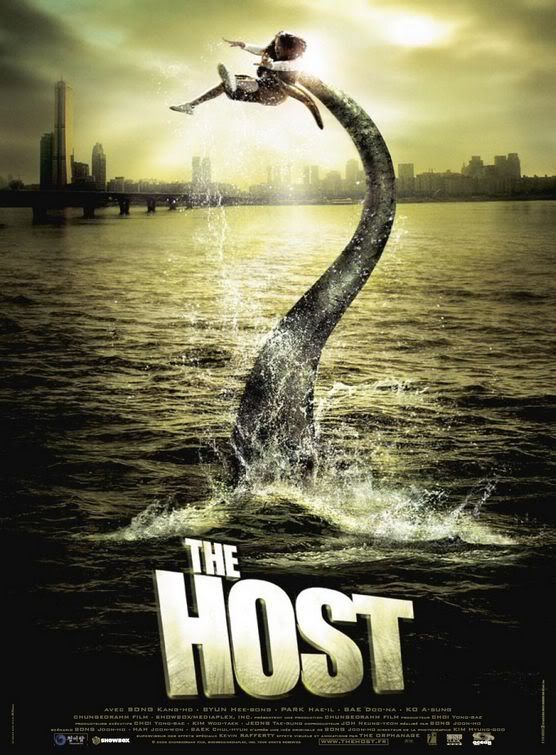 Soon after the strange creature rises from the Han River, making its first appearance in The Host, a monster movie from Korea, the title of the movie becomes clear: the creature is the host of a possible virus that threatens the populace of South Korea. But soon, the title also applies to the bumbling hero, Gang-Du, who was sprayed in the face with some of the creature’s blood and could also be hosting the virus and, as a result, is poked and prodded and treated like chattel by the authorities. Then as the film unfolds further, the host of the virus may very well be those authorities - the American military presence that still exists since the 1950’s in South Korea. After all, it was a US Military official who orders toxic chemicals are poured into the Han River, which, 6 years later, results in this monster. Then, the US sends in the CDC to help with the possible problem of the virus while also making a hero of a US serviceman who succumbs to the virus. And they may or may not be holding back some pertinent facts.
Unlike classic monster movies – like, for example, one of my all-time favorites Them - where the government and military are the heroes protecting the people from the otherworldly threat, in The Host this same intervention creates miscommunication and bureaucracy. The suspicion and cynicism directed at the military is a reflection of the current time. Here we have the authorities acting as they wish against a creature they don’t attempt to understand. The face-off climaxes with the release of a weapon to fight the creature among protests by citizens uncertain and suspicious of the way events are being handled.
Working their way through all this is the Park family. Hyun-seo, daughter of Gang-Du, is last seen wrapped in the tail of the amphibious monster that disappears under the river. The family has reason to believe that she is still alive, trapped beneath the river in a sewer. Because the authorities won’t help, the family - Gang-Du’s father, Hie-bong, the owner of a foodstand where Gang-Du also works; his brother, Nam-il, a disillusioned college graduate and current ne'er-do-well; and his sister Nam-Joo, an accomplished archer - band together to rescue Hyun-seo. The family’s quest against both the government and the monster creates a tension from which humor (many times uncomfortably hilarious slapstick scenes), warmth, and, of course, the usual family dysfunction exist.
As for the monster part of this monster movie, The Host doesn’t rely on quick editing to manufacture scares. Nor does it pile on the gore. Two of the best scenes in The Host represent a tour-de-force of directing by Joon-ho Bong. He leaves the action off-screen long enough to fool the audience into thinking one thing happens only to reveal that another has. By slowly unfolding the scenes - each one represents only a few seconds of time - and allowing us to breath a sigh of relief makes the revelation of the true terrible reality to resonate all the more.
The crowd I saw The Host with reacted the same way to both these scenes – gasps of surprise then a slow murmur of “oh no” buzzed throughout the theatre – which only drives home the humanism that Joon interjects into the movie. Sure, it’s a big monster from the river, but what the monster’s rampage tells us about our own dealings with family and society is where the real movie magic happens.
Monday, February 19, 2007
DVD REVIEW: Pusher
 From Denmark and made in 1996 (the first part of the eventual Pusher Trilogy), Pusher explores a week in the life of a small-time drug dealer who tries to solve his money problems by getting in over his head on a big score. It balances the ordinariness of the everyday with gritty street life existence and does so convincingly.
Frank seems to be eking out a meager existence as a dealer. He pals around with his friend Tonny and is involved romantically with Vic, a dancer. When an old jail acquaintance comes to him with a sure thing, Frank goes into hock with even further with Milo, the local bigwig. In between he stays out late, parties, and has inane conversations with Tonny about sex and women.
As Frank’s dilemma builds the mood of the movie becomes more frantic. His brooding personality turns to distraction as he attempts to collect money form the various losers that owe him. Soon, of course, this all catches up to him. The movie is at once grim with cloudy, damp, cold Denmark as a backdrop, as well as human. Frank becomes not an anti-hero of cool as portrayed in many modern films that feature such characters, but a well-rounded and deftly conceived character that makes poor decisions to correct bad ones.
There are some heart-pounding scenes of power by director Nicolas Winding Refn – Frank running through the streets shown from a longview from the sidewalk with the police in pursuit and when Frank at his wit’s end tries to collect money from a hapless and scared junkie. The script tells it story without the flair for the melodramatic and/or grandiose exclamation point that spoils many of the genre’s endings. Instead, the finality and ambiguity of ending simply adds a period to the final shot to make all that leads up to it all the more remarkable.
DVD REVIEW: X-Men 3: The Last Stand
 A mish-mash of a movie that is clumsy and shallow and an altogether poor follow-up to the previous two X-Men movies, X-Men 3: The Last Stand is disappointing mostly because of the potential that it wastes. The previous installments directed by Bryan Singer, provide much fertile ground for this story to take seed, yet it uses narrative as distraction between action scenes and doesn’t try to drill for the depths that seems to come naturally for other comic book movies (Spiderman for instance).
The story is about a mutant who is able to take powers away from other movies and the pharmaceutical company that exploits this child’s power to create a “cure” for all mutants. The allegory that exists between this and the search for the “gay gene” in our contemporary times is unexplored. The head of the drug company moves ahead with this because his son is a mutant with big feathery wings sprouting from his back. Fans of the X-Men comic book will be sorely disappointed to see how underdeveloped the character of Angel is. To say he’s a plot device to make a point about the kindness in those poor misunderstood mutant hearts is an understatement. The use of Angel and his relationship with his father is contrived, silly, and laughably resolved.
There’s also incoherence to the scenes. Wolverine murderously slices his way through Magneto’s guards outside of a forest retreat. That’s it. Nothing more happens. Just an excuse to have Wolverine go on a killing rampage. There are a few surprises but these are shoehorned in between such drivel that their dramatic effect is negated. The fate of Wolverine’s love for Jean Grey is ham-handedly foreshadowed that one waits with impatience for it to happen if only so that this ordeal of a movie can end.
Sunday, February 18, 2007
DVD REVIEW: Half Nelson
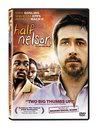 Half Nelson concerns itself with a middle-school teacher with a drug habit, the student who discovers him smoking crack in the gym locker room, and the complicated relationship that ensues between the two. Its strongest point is the straightforward way that Dan Dunne’s, the teacher, and Drea’s, the student, concern for each other affect the unfolding of the story. Drea’s back-story – her imprisoned brother and her surrogate father, who is also a drug-dealer – are known to the audience but are kept from Dan. How this lack of knowledge affects the way Dan approaches Drea’s wellbeing is superbly illustrated.
Though the movie does lag a bit after the initial set-up and takes, perhaps, too long to reach its end, it’s anchored by the performances. Ryan Gosling is understated as the teacher. He reaches not for pathos but achieves sympathy for exacting the line between his own tormented actions and his need to do well in the classroom. Shareeka Epps as Drea shows a determined yet vulnerable strength as she struggles to understand her teacher’s weaknesses, her mother’s absence due to working double shifts and Frank’s, the local drug dealer, kindness and generosity.
The movie becomes episodic in its middle part – and a few of these represent the heart of the movie: Dan runs into a father of a former student at a bar and Drea visits her brother in prison. Early in the film, Dan tells an acquaintance that he just wants to reach one student and that’s all. These scenes heart-wrenchingly display the yawning divide that all teachers must navigate: their own failings and the complex tug of the world outside of the classroom.
Subscribe to:
Posts (Atom)