Saturday, July 28, 2007

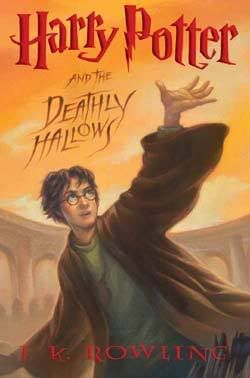
BOOK ROUNDTABLE (Entry 6): Harry Potter and the Deathly Hallows


SPOILERS. Colbinski and Nimero are engaging in a back-and-forth discussing the final Harry Potter book. All matters in the book will be discussed. SPOILERS

Click here for Entry 1 of this Roundtable
Click here for Entry 2 of this Roundtable
Click here for Entry 3 of this Roundtable
Click here for Entry 4 of this Roundtable
Clickhere for Entry 5 of this Roundtable

Well, Harry rightly recognizes Sanpe’s contributions giving his son the name Albus Severus, “named for two headmasters of Hogwarts…[Snape] was probably the bravest man I ever knew.” I’m sure the wizarding world in general also recognizes as much. However, how brave would Snape’s path have been if Neville was the “Boy That Lived”? Snape would be without his anti-James Potter inclinations, but, on the other hand, he would be without his love for Lily Potter to keep him straight too.

I must say, after Harry’s victory, when he ascends to the Headmaster’s office, I hoped that Snape would pop-up in one of the portraits, though having died moments earlier, I knew it would be unlikely. But as Harry names him as a headmaster to his son, I would think he now has a portrait in that office despite the fact that his ascension to headmaster was due to, well, his killing Dumbledore, and the Death Eaters taking over the Ministry. (No way that Umbridge has a portrait!)

The Harry Potter series, as a whole, did not disappoint me. I wavered after book 2 back when it was published, but after seeing the film adaptations for books 3 and 4, I re-visited the stories and have been hooked ever since. I look forward to a few years from when I can read these to L.R. That will be a magical experience.

Wednesday, July 25, 2007

BOOK ROUNDTABLE (Entry 5): Harry Potter and the Deathly Hallows


SPOILERS. Colbinski and Nimero are engaging in a back-and-forth discussing the final Harry Potter book. All matters in the book will be discussed. SPOILERS

Click here for Entry 1 of this Roundtable
Click here for Entry 2 of this Roundtable
Click here for Entry 3 of this Roundtable
Click here for Entry 4 of this Roundtable

One quick note about Snape before I leave for a few days. While I rightly predicted that Snape was a “good guy” and killed Dumbledore on orders by him I was wrong about the specifics. In Book 6, we watch Snape conduct an Unbreakable Oath to kill Dumbledore. Because of this I thought that Snape made Dumbledore an unbreakable oath to stay loyal. It’s important to note that Snape hade to take that oath in order to kill Dumbledore and appear loyal to Voldemort whereas he stayed loyal to Dumbledore and Harry not through wizardry but love for Lily Potter. Colbinski, in the period between the ending of the book and the epilogue do you see Snape not only being redeemed but recognized as one of the most powerful and capable wizards ever?

Tuesday, July 24, 2007

BOOK ROUNDTABLE (Entry 4): Harry Potter and the Deathly Hallows


SPOILERS. Colbinski and Nimero are engaging in a back-and-forth discussing the final Harry Potter book. All matters in the book will be discussed. SPOILERS

Click here for Entry 1 of this Roundtable
Click here for Entry 2 of this Roundtable
Click here for Entry 3 of this Roundtable

I thought Harry as the last Horcrux was handled deftly. Firstly, it allowed Harry to sacrifice himself and have Voldemort kill one of his own Horcruxes. Secondly, it allowed hope in the resistance seeing that Harry wasn’t dead – again. Finally, despite the buildup, especially as seen in Book 6, it allowed Harry to defeat Voldemort without having to kill him. Harry never casts the killing curse. He takes the wand and Voldermort own spell used against Harry is what does him in.

I was disappointed in the epilogue precisely because it was only a snapshot and therefore seemed inadequate considering the world that has been created in the previous seven books. I don’t envision a wizarding utopia with goblins marrying mudbloods but, like you, I would like to see more of what happened in the aftermath of Voldemort’s demise.

The answer to how Neville could retrieve the Sword of Gryffindor from the Sorting Hat is the same reason that Harry did in Book 2 and how Ron grabbed it out of the pool in this oone (and the reason why you cheered Neville on). Only a Gryffindor with “daring, nerve, and chivalry” could retrieve the sword. Neville displayed he was a true Gryffindor and was thus rewarded. It also showed that the sword belongs to Gryffindor and not to goblins. (I’d like to see Harry explain to Griphook how the sword ended up back at Hogwarts without ruining wizard-goblin relations.)

I will be away camping for the next several days. I’ll address additional comments and questions upon my return. In the meantime I’ll leave you with this final thought: I would have liked to see the rest of the wizarding world fleshed out even a little bit. After the attack at the Fleur-Weasley wedding I expected some retaliation from the continental or, at the very least, the French wizards.

BOOK ROUNDTABLE (Entry 3): Harry Potter and the Deathly Hallows


SPOILERS: Colbinski and Nimero are engaging in a back-and-forth discussing the final Harry Potter book. All matters in the book will be discussed. SPOILERS

Click here for Entry 1 of this Roundtable; Here for Entry 2

Harry, Ron and Hermione needed to know about the Hallows, they didn’t need to find them. It’s the knowledge of them that’s important and the knowledge jobs go to Hermione. The wand-lore and who disarmed who and it’s the wizard and not the wand and all that jazz (I can’t say I found that talk interesting or easy to follow) all plays into the myth of the deathstick or Elder Wand. Our heroes needed to know about the Hallows. To defeat Voldemort - and the Horcruxes – they had to understand what the old fiend was up to. Like I noted, the Horcrux v. the Hallows was an intriguing development. It also symbolized the differing quests Harry and Voldemort were on: one of self-sacrifice, the other for ultimate power.

Speaking of Horcruxes, I thought it would be dumb for Harry to be one of the final Horcrux. I thought the revelation of that was handled well. Sort of. But let me get this straight: all those years ago, Lily’s charm – her love for Harry – rubbed off on Voldemort at the same time Harry was implanted with part of Voldemort’s soul thus making him a Horcrux. Huh? Combine this with the wand business and the final confrontation is a calculus question and not an epic battle of good and evil.

Your observation about wizards, goblins, and elves fighting and suffering together is acute. Just as Rowling complicated Dumbledore past the Gandalf imitation he appeared as in the early books, I enjoyed the complicated relationship of “good” wizards with Goblins. The history is murky and from what we know it’s one which bad blood carries through the generations. How does Voldemort’s defeat impact these various magical creatures? Since Voldemort wanted to purify the magical world, my optimistic self sides on the fact that a new dawn has risen after this book.

Apparently, in that dawn Ron learns to do Muggle stuff like drive a car. (Remember, Mr. Weasley loved Muggle machines, so it’s not so farfetched.) On one hand I enjoyed the snapshot – and the epilogue is nothing if not a snapshot showing one morning 19 years ahead with no preamble or afterward – portrayed. It implies a simple and decent life for our trio. But we don’t know how simple. Perhaps, Harry is the head Auror and Hermione is the head of the Ministry of Magic. I don’t know. That’s part of what made it a satisfying epilogue. I just wish there was an immediate aftermath chapter that fills in some post-Voldemort developments.

I’ll leave you with a head-scratcher: the last we see the sword of Griffindor, the Goblin escapes with it but yet Neville finds it in the burning Sorting Hat (add it to the death list?) to destroy the snake Horcrux. How’d he get that sword? Wizard’s property laws are magical? Nonetheless, Longbottom screaming “Dumbledore’s Army!” while going one on one with Voldemort left me cheering.

BOOK ROUNDTABLE (Entry 2): Harry Potter and the Deathly Hallows


SPOILERS. Colbinski and Nimero are engaging in a back-and-forth discussing the final Harry Potter book. All matters in the book will be discussed. SPOILERS


Click here for Entry 1 of this Roundtable

I agree with Colbinski that it was an impressive and entertaining read. I do have some quibbles to be addressed, though. Both with Colbinski and with the book overall. While the story does move briskly and Rowling has an uncanny ability to end each chapter with you wanting more, there is a tendency for the story to flag a page or two into each chapter. Then the chapter picks up again, some action occurs usually preceded by helpful exposition, and then off to a humdinger of an ending.

It works. It works well. But looking back over the book there’s too much. Too much close calls. Too much of teenagers defeating adult wizards who in later scenes we see dueling evenly with other accomplished wizards. I would have been happier with spending time with the quest rather than it becoming a chase story. I agree about the Umbridge sidetrack. Umbridge is never mentioned again. Was she a Death Eater or just a loyal ministry bureaucrat? Her name isn’t mentioned during the Battle of Hogwarts so I suspect the latter although she seemed too gleeful about torture not to join, no?

I have no quarrel with how much face time Snape received. The “Is Snape good or bad?” question was one of the most important going into this book. Keeping him off the page and out of the action was wise. It did not become a distraction to attempt to parse all of Snape’s actions into answering that question. In fact, the answer to this question was about the only correct prediction I had concerning this book.

It is a very clever book set up nicely by its predecessors. Snape is explained cleverly. Sharing Dumbledore’s wisdom is clever. Having house elves and goblins we meet earlier in the series play roles is clever. I’m sure if I reread all the books at once I will see even more connections and foreshadowing (Colbinski already points out the Dumbledore trading card). One area that Rowling was not clever enough was the gifts left to Hermione. Hermione is constantly reading the book left to her by Dumbledore but I’m not sure any useful information is gained from it. She notices the Deathly Hallows sign in the book which leads them to Harry’s birthplace and then to the Lovegood house. As Dumbledore wanted them to be looking for Horcruxes and not the Hallows this obviously wasn’t the information he intended her to glean. So what was the purpose of the book to Hermione? Am I missing some other information it provided?

My biggest criticism is the epilogue. Partly because I never approved of the Harry/Ginny connection I didn’t really care to see them married with kids. Mostly because it was just too tidy. The small glimpses we see are the characters as we know them from the seven years the books cover only now with kids. There’s no insight to the effect of the world on them for the past nineteen years. They are living as you would imagine them living if Voldermort never returned and everything went swimmingly during their time at Hogwarts. At the end of the Battle of Hogwarts it is noted how wizards of all ages and Houses and bloodlines were sitting together with elves and centaurs. The scenes with the goblin and house elves intimated that there may be integration of all magical creatures throughout the wizarding world. Did that happen? Was the Minstry of Magic still a useless governmental agency or could it now affect change? I was less interested that Harry’s kid didn’t want to be a Slytherin than the fact that Hogwarts still held different Houses. I wanted to know if house elves were liberated or if goblins could use wands. I know the epilogue is there to put to rest any talk of Voldermort not being dead or a way to stop any further Harry adventures. But it seemed pointless. The last two sentences of the epilogue would have worked as well, if not better, as the last two sentences of the final chapter.

Monday, July 23, 2007

BOOK ROUNDTABLE (Entry 1): Harry Potter and the Deathly Hallows


SPOILERS. Colbinski and Nimero are engaging in a back-and-forth discussing the final Harry Potter book. All matters in the book will be discussed. SPOILERS

Overall, I was impressed with Harry Potter and the Deathly Hallows. With few exceptions it moved briskly and, as always, Rowling is a clever plotter, with even the most predictable plot points always seeming fresh when finally unveiled.

The quest set-up, as opposed to the Hogwarts school year set-up, worked well. Unfortunately it meant that meant that secondary characters waited in the wings until the final turn. This limited how much of the Hogwarts staff and students we see. It’s almost criminal how little time Snape gets, especially so when we find out how freaking important Snape is to Harry’s victory!

Before my questions and/or criticisms let me start with a device I liked: Harry & Company’s search for the Horcruxes contrasted with Harry’s vision of Voldemort’s quest, for what he would find out, is the Elder Wand of the Deathly Hallows. Harry had no idea what Voldemort was up to, and Voldemort had no idea that Harry was active and not just “in hiding.” Voldemort’s hubris is on full display in this volume and it all fits into his path of resurgance – he thought the Horcruxes were safe; he knew nothing past the obvious about the Hallows; he knew nothing of how elves could travel.

That last point struck me as somewhat of a cop-out: Dobby to the rescue! Perhaps it’s because since book 2, I’ve found the elves we’ve met, Dobby and Kreacher, to always be plot contrivances. Here, they do the same: Kreacher provides important information about the Horcrux locket and Dobby dies a hero. On the most part, I delight in Rowling’s ability to re-introduce and rehash characters and events; I just have no patience for these house-elves. Dobby death was more annoying to me than gripping.

OK, let’s get to the other deaths: Mad-Eye’s death was a wonderful red herring. It happens early and I’m sure every reader thought there was a chance he would come back. Fred’s death was inevitable – by inevitable, I mean that at least one Weasley had to perish. Lupin and Tonks’ deaths were oddly off-screen. I suppose that makes sense – Harry would have been too distracted upon seeing those deaths and that whole Battle of Hogwarts scene was through his eyes. Snape dies as soon as he enters the action. But I did like that he dies without anyone knowing what he did only to be appreciated after the smoke clears. It’s a shame that the epilogue didn’t deal with the immediate ramifications of these deaths and the wizarding world in general.

Dumbledore’s back-story was executed with grace and intrigue. Again, Rowling takes a story we learn from a collectible card in book 1 and turns it into an important event. I, of course, speak of Dumbledore and Grindelwald’s duel.

Dumbledore was all over this story in a good way. Another excellent red herring was the blue eyes in the mirror shard and I enjoyed the Aberforth storyline. Was the bartender as Hog’s Meade ever identified before?

Two major criticisms: Ron’s contrived leaving and returning with news he slowly remembers over the next few chapters. I wish Rowling found a better way for Harry, Hermoine and Ron to get information while laying low.

My second criticism is that Umbridge ended up with the locket. I could have done without the whole Ministry break-in. The break-in to Gringrotts would have sufficed.

I'll leave it here for now. I haven't even mentioned Neville's kicking ass or the convulted wand-lore that hurts my head when I think about it too long. For now, I'll turn it over you, Nimero.

Saturday, July 14, 2007

MOVIE REVIEW: SiCKO


Do not view Michael Moore’s new documentary SiCKO, as an encompassing argument against the U.S healthcare system. As its title indicates the main purpose is to show what is wrong with said system. On that it does an admirable (if not easy) job. There is no argument because, other than clips of politicians praising new health policy, this documentary shows no defense for U.S. healthcare. And what it does present is not nuanced or multi-layered, as is Moore’s wont.

There is barely a mention of American exceptionalism or the history of volunteerism that has guided the U.S. healthcare system to its current paltry state. It does not mention that throughout the years labor unions have been as much to blame as the AMA for preventing any type of national healthcare from moving forward. It bandies about the terms “socialized medicine” and “national health care” without definition or context. This is especially true in the second half of the movie when the focus shifts from what’s wrong with the American way to what’s right with the healthcare systems of Canada, Great Britain, France, and Cuba. All the glories of these systems are presented but not how these systems work. Despite these failings it is still an enjoyable and good film.

If every American saw this film I have no doubt a healthcare revolution would occur. But because it offers no solutions (“other countries do it better and cheaper than we do” is not a solution) I would fear that the American people would accept any change whether it is better or worse than the current system. SiCKO makes a strong case that change is necessary but then offers no specifics on what that change should be or how it should come about. SiCKO (and most other media outlets) makes it appear that the choice is either the current U.S. system or a universal payer national system. There are no alternatives to these broad brushes mentioned even though the four countries presented as antithesis to the U.S. all have systems that differ from each other. Which one should we emulate? A professor of mine, who has studied U.S. and international healthcare for many years, once stated that the U.S. would be best off if we went more towards the French system. From my Health Policy class I took with him, I am inclined to agree but you could never come to that conclusion from watching SiCKO.

I suppose this is my biggest problem with SiCKO. Other than C-SPAN clips of politicians patting themselves on the back for passing policy written by the insurance companies there is only interviews with ordinary people adversely affected by the current system. These human-interest stories are the heart of the film but I was expecting to see some non-politician wonks talk about the system. I know this is not what Moore does but it cheats the audience. If Moore really wanted to change the U.S. healthcare system, leave out the other countries and provide various suggestions by experts on what can actually be done. The film may make you raise your fist in rage and demand that something changes but it provides no path to turn that rage into constructive energy. And that’s what is needed to change the U.S. healthcare system.

Saturday, July 07, 2007

MOVIE REVIEW: In Between Days


This small film represents what I enjoyed about independent movies when the word “independent” first came into vogue. The recent change to films that seem to be all zany families, quirky characters or outlandish situations can make one forget how enjoyable indies used to be. In not trying to be more than it is, In Between Days has resonance not found in its slicker, more stylized cousins.

Aimee (Jiseon Kim) is either distracted or daydreaming forever doodling when she should be studying. She does focus on Tran (Taegu Andy Kang) but only in a teenage crush type of way. She attempts to determine his feelings for her while steering clear of revealing hers first. We see little interaction of Aimee with other friends and when it does occur she is awkward and self-conscious. Perhaps it is due to speaking English, which takes away the comfort she feels with communicating with Tran in her native Korean. But language is not the only barrier for there appears to be an uncomfortable distance between her and her mother (Bokja Kim) with whom she has recently immigrated to this unnamed North American city.

As a result of these interactions Aimee is recognizable and easily liked by the viewer. The film only takes us into the life of Aimee for a about a week but a deft performance by Jiseon Kim makes her feel like someone we know intimately. Her eyes and puffed up face hide emotions while a sly smile is sometimes used to portray the momentary glimpses of joy and hope a young teenager with a crush feels. A hand held camera that follows the characters around without staging them but is capable of getting close-ups without obtrusiveness adds to the intimacy of the story.

The slow pace and short running time are actually advantages to the overall story. The most striking scenes are of still landscape images with Aimee’s voice emanating from the background. She reads letters written to her absent father illustrating a world she imagines her father would like her to have. These unmoving images that Aimee recites these letters over not only represents the change to the new location Aimee and her mother have undergone but also illustrate the problems Aimee has dealing with these changes.

DVD REVIEW: Little Children


In my Top Movies 2006 list I mention Little Children as a film I had not yet seen but one that, perhaps, due to its critical adulation would be on that list. Well, now having watched it I can safely say that it would have had no impact at all on that list. It is not bad enough to have made any mention, even on my short list of the two worst I saw all year but it is an awful film nonetheless.

The story can be summed up as thus: uninteresting characters making uninspired choices. Lets see, we have vulture-like housewives who watch over their children in a local playground. The most bored of these housewives ends up in an affair with a clueless househusband. We know she is the most bored because we are told what subject she studied in college and that information is supposed to make her the most interesting of all the cardboard caricatures that inhabit this story. Throw in a porn addicted husband, a battle-ax mother-in-law, an ex-cop with mental problems, and some very creepy scenes involving a pederast and you have what most critics considered some sort of modern masterpiece. Instead it is the most boring, uninvolving film I have seen in some time.

I suppose certain middle-aged critics who may live in suburbia can find something to relate to. I have no idea. I also never understood why Todd Field’s first film In the Bedroom was so well received. Field may well be the most overrated filmmaker working today. “Lesser” movies, those that don’t aspire through marketing or literary pedigree to be taken as “serious films”, are often derided for the same reasons Little Children and In the Bedroom were praised: coincidences and poor character choices done solely to move towards the end of the story. In action movies it is called cliché, but, for some reason beyond my comprehension, in Todd Field’s overwrought dramas it is considered art.

Friday, July 06, 2007

On Being Born


A child was born on a cold rainy night thirteen days into the month of March. This child was brought forth at six and a half months gestation, propelled into the world by a brother who had the audacity to arrive unannounced. For seven short minutes this child was an individual, a namesake for the father. Then the surprise happened. For better or worse, this child would be known as a twin for evermore.

Most children have their first pictures taken red-faced and squalling cradled in the bosom of a harried mother. The first photo evidence for this child (and his twin brother) is a small white bundle, barely discernable as an infant, lying in a ventilation chamber visible only through the chicken wire encased window of a strong oak hospital door. Born prematurely, Death hovers in the room with him. It’s icy grip anxiously waiting to grab hold of the 4.6 ounces of human flesh and bone. This child, not knowing any better, fights on as every breath is challenged. After seventeen long days this child (and his twin brother) are permitted to go home and join his parents and other siblings.

This child has fought death and must now face life.

Thursday, May 10, 2007

MOVIE REVIEW: Spiderman 3


One of the strengths of Sam Raimi’s original Spiderman was its ability to feel like a comic book. As many dreadful movies based on comics show, this task isn’t easy to pull off. Balancing of a comic’s goofy majesty and a movie’s demand for gritty realism is a precarious one to maintain even in the superhero movie genre. Spiderman accomplished this feat with easy aplomb. Whether it was Spidey’s web-slinging and wise-cracking through the city or Peter Parker’s trials as a nerdy and lonely high-school student, Raimi pulled together that first movie with a deftness and cleverness, which, remarkably enough, he was able to keep fresh for the second installment in the franchise. The newest entry to this saga, Spiderman 3, doesn’t seem burdened by the comic book magic conjured in the first two. In fact, it decides to shed that magic. Raimi re-visits old stories, re-vamps Spidey’s first – and most important lesson (“With great power comes great responsibility”) - and muddles up an overloaded plot with a climax that is lazy and contrived and, as a result, a disappointing entirety of a movie.

It starts well enough. Unfolding the daily drama of Peter Parker and his relationship with Mary Jane against Spiderman’s growing popularity the movie seems relaxed and confident. Interjected into this is the revenge plot of the New Goblin, Harry Osbourne, son of the Green Goblin, against Spiderman. This first action sequence is pretty amazing stuff: going through alleys and among rooftops, the scene plays out like a rollercoaster ride. Many times throughout the camera changes angles and one second we’re watching Spiderman in pursuit and the next we roll out in front of the Goblin then back around again. It was chaotic and exhilarating to watch.

Peter’s domestic life gets chaotic as well. Mary Jane is frustrated with her life as a singer but can’t get an oblivious Peter to understand. Spiderman’s grandstanding – he’s given a key to the city and Peter relates all this to a distraught Mary Jane - just adds to all this. Then there’s Flint Marko, an escaped criminal, who falls into a particle accelerator, or something of the like, and, in a magnificent resurrection scene, rises again with his body turned to sand. Marko is also connected to Peter’s Uncle Ben’s death (which happened in the first movie). Oh, and a meteorite falls to Earth – in Central Park right near where Peter and Mary Jane are – and a strange black goo emerges and hitches a ride on Peter’s scooter. Finally, there’s Eddie Brock, a photographer, who’s giving Peter competition at the Daily Bugle for Spiderman shots.

At first, Raimi juggles all these plotlines convincingly. They slowly merge and the pace works, balancing the Peter parker scenes with the crowd-pleasing action sequences. But soon the story hits a wall. The alien goo takes over his Spiderman costume turning it black and turning Peter into a narcissistic jackass. Raimi milks some comedy out of Peter’s newfound jerkiness but the denouement of the “black costume” Spiderman is rushed and stilted.

After that the movie surrenders to lazy writing – characters are redeemed based on an admission by an extremely minor character, which is laughably obvious and poorly executed - and boring action sequences. I sat through the final 25 minutes befuddled by how the movie went sour. As opposed to the first two, it was the comic book that imposed the limitations. But in this installment, the story seeks inspiration by throwing in characters from the comic without thought or purpose (Gwen Stacey). Finally, by cramming in the black costume/Eddie Brock/Venom storyline, Spiderman 3 became a victim – just like Peter Parker in the movie- of its own popularity.

Monday, March 19, 2007

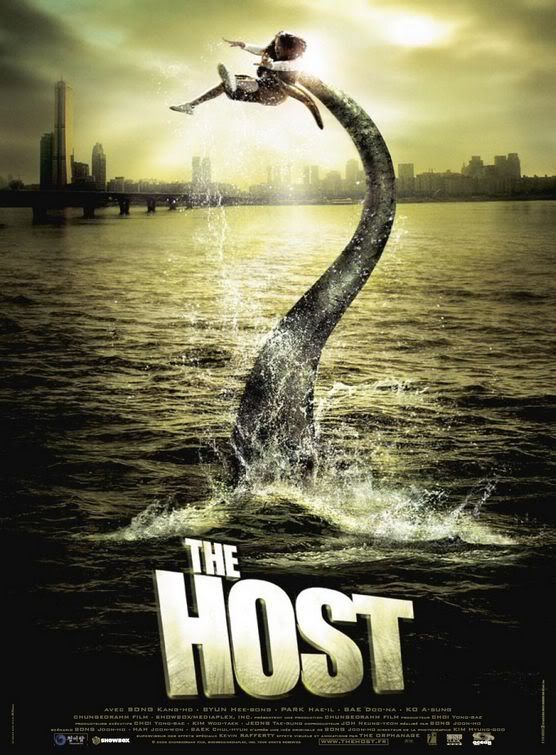
MOVIE REVIEW: The Host


Soon after the strange creature rises from the Han River, making its first appearance in The Host, a monster movie from Korea, the title of the movie becomes clear: the creature is the host of a possible virus that threatens the populace of South Korea. But soon, the title also applies to the bumbling hero, Gang-Du, who was sprayed in the face with some of the creature’s blood and could also be hosting the virus and, as a result, is poked and prodded and treated like chattel by the authorities. Then as the film unfolds further, the host of the virus may very well be those authorities - the American military presence that still exists since the 1950’s in South Korea. After all, it was a US Military official who orders toxic chemicals are poured into the Han River, which, 6 years later, results in this monster. Then, the US sends in the CDC to help with the possible problem of the virus while also making a hero of a US serviceman who succumbs to the virus. And they may or may not be holding back some pertinent facts.

Unlike classic monster movies – like, for example, one of my all-time favorites Them - where the government and military are the heroes protecting the people from the otherworldly threat, in The Host this same intervention creates miscommunication and bureaucracy. The suspicion and cynicism directed at the military is a reflection of the current time. Here we have the authorities acting as they wish against a creature they don’t attempt to understand. The face-off climaxes with the release of a weapon to fight the creature among protests by citizens uncertain and suspicious of the way events are being handled.

Working their way through all this is the Park family. Hyun-seo, daughter of Gang-Du, is last seen wrapped in the tail of the amphibious monster that disappears under the river. The family has reason to believe that she is still alive, trapped beneath the river in a sewer. Because the authorities won’t help, the family - Gang-Du’s father, Hie-bong, the owner of a foodstand where Gang-Du also works; his brother, Nam-il, a disillusioned college graduate and current ne'er-do-well; and his sister Nam-Joo, an accomplished archer - band together to rescue Hyun-seo. The family’s quest against both the government and the monster creates a tension from which humor (many times uncomfortably hilarious slapstick scenes), warmth, and, of course, the usual family dysfunction exist.

As for the monster part of this monster movie, The Host doesn’t rely on quick editing to manufacture scares. Nor does it pile on the gore. Two of the best scenes in The Host represent a tour-de-force of directing by Joon-ho Bong. He leaves the action off-screen long enough to fool the audience into thinking one thing happens only to reveal that another has. By slowly unfolding the scenes - each one represents only a few seconds of time - and allowing us to breath a sigh of relief makes the revelation of the true terrible reality to resonate all the more.

The crowd I saw The Host with reacted the same way to both these scenes – gasps of surprise then a slow murmur of “oh no” buzzed throughout the theatre – which only drives home the humanism that Joon interjects into the movie. Sure, it’s a big monster from the river, but what the monster’s rampage tells us about our own dealings with family and society is where the real movie magic happens.

Monday, February 19, 2007

DVD REVIEW: Pusher


From Denmark and made in 1996 (the first part of the eventual Pusher Trilogy), Pusher explores a week in the life of a small-time drug dealer who tries to solve his money problems by getting in over his head on a big score. It balances the ordinariness of the everyday with gritty street life existence and does so convincingly.

Frank seems to be eking out a meager existence as a dealer. He pals around with his friend Tonny and is involved romantically with Vic, a dancer. When an old jail acquaintance comes to him with a sure thing, Frank goes into hock with even further with Milo, the local bigwig. In between he stays out late, parties, and has inane conversations with Tonny about sex and women.

As Frank’s dilemma builds the mood of the movie becomes more frantic. His brooding personality turns to distraction as he attempts to collect money form the various losers that owe him. Soon, of course, this all catches up to him. The movie is at once grim with cloudy, damp, cold Denmark as a backdrop, as well as human. Frank becomes not an anti-hero of cool as portrayed in many modern films that feature such characters, but a well-rounded and deftly conceived character that makes poor decisions to correct bad ones.

There are some heart-pounding scenes of power by director Nicolas Winding Refn – Frank running through the streets shown from a longview from the sidewalk with the police in pursuit and when Frank at his wit’s end tries to collect money from a hapless and scared junkie. The script tells it story without the flair for the melodramatic and/or grandiose exclamation point that spoils many of the genre’s endings. Instead, the finality and ambiguity of ending simply adds a period to the final shot to make all that leads up to it all the more remarkable.

DVD REVIEW: X-Men 3: The Last Stand


A mish-mash of a movie that is clumsy and shallow and an altogether poor follow-up to the previous two X-Men movies, X-Men 3: The Last Stand is disappointing mostly because of the potential that it wastes. The previous installments directed by Bryan Singer, provide much fertile ground for this story to take seed, yet it uses narrative as distraction between action scenes and doesn’t try to drill for the depths that seems to come naturally for other comic book movies (Spiderman for instance).

The story is about a mutant who is able to take powers away from other movies and the pharmaceutical company that exploits this child’s power to create a “cure” for all mutants. The allegory that exists between this and the search for the “gay gene” in our contemporary times is unexplored. The head of the drug company moves ahead with this because his son is a mutant with big feathery wings sprouting from his back. Fans of the X-Men comic book will be sorely disappointed to see how underdeveloped the character of Angel is. To say he’s a plot device to make a point about the kindness in those poor misunderstood mutant hearts is an understatement. The use of Angel and his relationship with his father is contrived, silly, and laughably resolved.

There’s also incoherence to the scenes. Wolverine murderously slices his way through Magneto’s guards outside of a forest retreat. That’s it. Nothing more happens. Just an excuse to have Wolverine go on a killing rampage. There are a few surprises but these are shoehorned in between such drivel that their dramatic effect is negated. The fate of Wolverine’s love for Jean Grey is ham-handedly foreshadowed that one waits with impatience for it to happen if only so that this ordeal of a movie can end.

Sunday, February 18, 2007

DVD REVIEW: Half Nelson


Half Nelson concerns itself with a middle-school teacher with a drug habit, the student who discovers him smoking crack in the gym locker room, and the complicated relationship that ensues between the two. Its strongest point is the straightforward way that Dan Dunne’s, the teacher, and Drea’s, the student, concern for each other affect the unfolding of the story. Drea’s back-story – her imprisoned brother and her surrogate father, who is also a drug-dealer – are known to the audience but are kept from Dan. How this lack of knowledge affects the way Dan approaches Drea’s wellbeing is superbly illustrated.

Though the movie does lag a bit after the initial set-up and takes, perhaps, too long to reach its end, it’s anchored by the performances. Ryan Gosling is understated as the teacher. He reaches not for pathos but achieves sympathy for exacting the line between his own tormented actions and his need to do well in the classroom. Shareeka Epps as Drea shows a determined yet vulnerable strength as she struggles to understand her teacher’s weaknesses, her mother’s absence due to working double shifts and Frank’s, the local drug dealer, kindness and generosity.

The movie becomes episodic in its middle part – and a few of these represent the heart of the movie: Dan runs into a father of a former student at a bar and Drea visits her brother in prison. Early in the film, Dan tells an acquaintance that he just wants to reach one student and that’s all. These scenes heart-wrenchingly display the yawning divide that all teachers must navigate: their own failings and the complex tug of the world outside of the classroom.

Saturday, February 10, 2007

DVD REVIEW: Why We Fight


Why We Fight looks at the motivation of the current Iraq War by documenting the half-century of the growing “military-industrial complex.” Lucidly and forthrightly presenting the business and political needs for war, this documentary powerfully explains the current imperial folly our country has undertaken and the institutions in place that allows it to do so. As one speaker explains it, the idea of war – and the businesses that manufacture the weapons, the armed forces that spend the money to buy those weapons, the think tanks that write policy supporting the use of those weapons, and the politicians that protect the weapons-makers - is so embedded in the fabric of our foreign policy that it is invisible. For example, while as Secretary of Defense under President George H.W. Bush, Dick Cheney saw a proposal for the army to outsource its service programs to private concerns. Later as CEO of Halliburton, one of its subsidiaries, Kellogg, Brown and Root becomes the country’s leader in providing these services to the Pentagon. Then as Vice President, Halliburton wins a no-bid contract for non-military services in the Iraq war. Of course, this evolution is by the book in the legal sense and there’s no paper trail of criminal misdeeds or shadowy conspiracy. This allows those that connect the dots to be written off as paranoid. But the dots are there to be connected. And to not be a little paranoid at this juncture is to be guilty of partaking in the “legalized corruption,” in the words of another commentator, of our system of laws that have allowed this entrenchment to become the status quo.

Monday, February 05, 2007

MOVIE REVIEW: Seraphim Falls


I remember while watching Nevada Smith as a boy being befuddled near the movie’s climax when Nevada has a change of heart toward the man who killed his parents. The same man he had vowed revenge on and pursued for all those years. He sought this man the entire movie only to give up now? It made no sense. My cousin explained to me that heroes don’t kill for revenge and Nevada realized this thus becoming a true hero. Oh, I thought. OK. That makes sense. The film set me up for revenge as Nevada’s triumph and instead, he achieved a triumph of a different kind. Wow, what a great movie my 8-year old self thought.

That was one of my first experiences with the Western. That archetype of the cowboy hero with the white hat has stayed with me – and stays with me still. Of course the portrayal of such heroes has become more complex. Perhaps, it was the cynical Vietnam-era movies like The Wild Bunch that ushered in the change. There the story centers on a ragtag group of anti-heroes and the viewer’s bloodlust is rewarded, in a sense, by a great violent ending (that also captivated my younger self). Live by the gun; die by the gun, so to speak. Later still, we have William Munny of Clint Eastwood’s Unforgiven. An anti-hero - his revenge scene is the best scene in a movie rife with great scenes -who can’t change yet he survives.

Mixing many of these archetypes and set on a smaller, character-driven scale – yet pregnant with epic ambition - is Seraphim Falls, a solid revenge movie that begins in the Ruby Mountains of Nevada in 1868 and ends in the cracked-earth desolation of a Nevada desert. Its main strength is the set-up: it begins as a terrific pursuit movie. Gideon (Pierce Brosnan) is shot while preparing a rabbit over a fire. He tumbles down the snowy mountain, falls into a icy river, and keeps on the move not knowing who pursues him or why. Soon we meet Carver (Liam Neeson) and 4 trackers. This opening sequence spans about 20 minutes and is done with minimal dialogue. It is exhilarating to watch. The patience of Carver contrasted with the frenzied escape of Gideon presents two elements that will define the rest of the story: Carver’s commitment to killing this man and Gideon’s ability to survive.

Carver wants Gideon dead for committing a terrible act of war involving Carver’s family in the waning days of the Civil War, an act that haunts both men. The one weakness of the screenplay (by David Von Ancken, who also directed, and Abby Everett Jaques) is that Gideon is given too much wiggle room to not be personally responsible for the crime against Carver’s family. His “it was war” excuse doesn’t satisfy Carver (and it shouldn’t), but it seemed that it tries to hard to exonerate him to the audience. In addition, the story almost loses its footing with some heavy-handed metaphors about using violence as an end versus finding a remedy to one’s problems. It worked for me – I didn’t mind the intrusion of the Indian at the waterhole or the traveling saleswoman peddling snake oil - with the exception of one scene where Gideon allows a bottle of elixir (“to fix what ails you”) to crash to the ground.

The movie is grounded by the performances: Brosnan is at his peak and probably the best I’ve ever seen him. Recovering in a small ranch while on the run, he has a gentle scene with a young boy then turns steely as the boy makes a grab for his satchel. Neeson matches him. His stature serves him well as the pursuit begins – he bullies the other trackers with the right amount of authority and threat. He faces an imperious railroad foreman with disdain and guile. Then his hulking presence, with the shoulders drooping, as he and Brosnan are both beaten and weary from the pursuit shows the cost of his obsession.

Carver’s quest for revenge puts him on the road that Gideon has been traveling all this time. Coming across an abandoned wagon in the desert, Carver remarks that there are choices a man makes to end up in a place like this. The real trick is finding out what a man needs to do to get out of a place like that.

Tuesday, January 23, 2007

MOVIE REVIEW: Inland Empire


David Lynch’s Inland Empire is, to be utterly unoriginal about it, an enigma. I’ve enjoyed his films in the past, most notably Eraserhead, Elephant Man, and The Straight Story. Blue Velvet had it moments as did Mulholland Drive. Of his past films (that I have viewed)Inland Empire shares the most similarities with Mulholland Drive. The aspects of Mulholland Drive that lost my interest are the same elements that take up almost 2 hours of Inland Empire’s almost 3 hour length. Sure, Inland Empire is an enigma, but it’s a candy store Chinese puzzle type of enigma: you can’t work it out and you don’t know why you bothered in the first place.

OK, perhaps not as superficial as the above example. It’s dazzling at times and the cat and mouse with the audience about what is real; what is part of the movie being made within the movie; what is a dream; has this character assumed the identity of that character is fascinating. At first. But on and on it goes with more possible dreamscapes and switched identities and movies within a movie and possibly dreams within dreams. I lustily stayed with all these gear changes waiting for a great sorting out, but as it reached its end, I knew that no narrative conclusion would be found. On and on it went. Even into the credits, where a dance number took place among the characters of the movie. That was actually fun and zany – in a regular zany way, not in the David Lynch zany way.

The story, as it where, is about Nikki Grace, an actress, (Laura Dern) getting a plum part in what could be a comeback role. Cast opposite her in the movie is a womanizing young actor named Devon Burk (Justin Theroux). Nikki also has a jealous husband. And on the first day of the shoot, they all discover that the movie was made once before with terrible ends for the actors involved (due to a gypsy curse). Also, Nikki, before getting the part, meets a new neighbor who tells her about a boy who brings evil into the world and a girl who gets lost at the market. So far, so good. The movie establishes this story thread tightly with limited interruption from the various dreams, motley characters, and settings that will soon intrude.

Then there’s a weeping woman watching a TV and three anthromorphized rabbits on a sitcom set - laugh track and all. Later there’s a bunch of Hollywood Boulevard prostitutes with hearts of gold or sad empty eyes, depending on the scene. Oh, I almost forgot about the Eastern European circus workers who show up at a suburban barbeque. And the odd office of a rumpled man atop a strip club. Somehow the movie moves along undistracted by all these seemingly incongruous elements. It’s actually sort of ingenious how it does move along: Nikki goes through a door and her reality changes. It sublimely done and I’m sure Lynch fans will pay close attention to all the doorways in future viewings and track the various levels of the story that way.

I will say this for David Lynch: he can create a sense of foreboding from familiar situations like no one else. Blue Velvet’s tension between the placid life of suburban America contrasted with it’s seedy underbelly established this foreboding in a way that was miles ahead of its time. While mimicked countless times since, other filmmakers just don’t have the surreal approach of Lynch to pull it off. This same uncomfortableness is on display in Inland Empire. Drapes are blood red, lamps buzz as if they were hives of angry hornets, and living room conversations over tea take on a sense of danger. Lynch cues this with close-ups of reaction shots and quick cuts between the conversation. Much of this is counterbalanced by other scenes that are brightly shot and are sweet or funny or absurd (like the prostitutes breaking into “Locomotion.”) These patented Lynch touches prevent the wheels from falling off. In fact, in some ways, these scenes are the glue between the dreams, the alternate realities, and the downward spiral of Nikki Grace and/or her character in the movie within the movie.

Some of Inland Empire works: what works does so as individual scenes, as wonderful examples of the medium of filmmaking. Much of it doesn’t work. Ultimately, I was nonplussed by it all. It was an interesting ride that kept my attention but I left shrugging my shoulders when it was all over. Too many doors never closed. Too many windows into David Lynch’s mind that remain wide open.
Wednesday, January 17, 2007

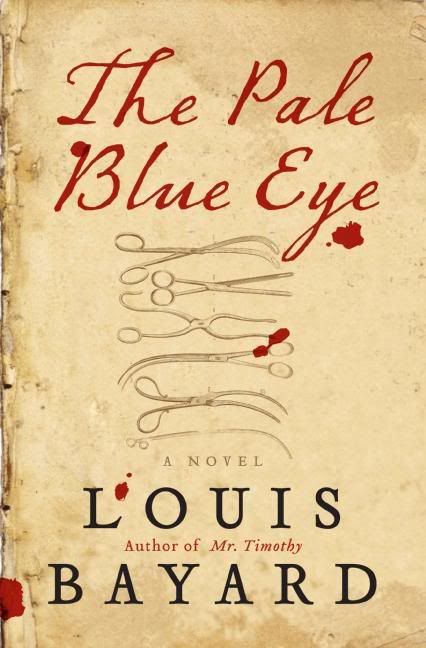
BOOK REVIEW: The Pale Blue Eye


Gus Landor, a retired New York City constable is hired by West Point to investigate a cadet’s mysterious death in the autumn of 1831. During the course of the investigation, Landor employs the help of another cadet. That cadet, it turns out, is a young Edgar Allan Poe. And thus is the set-up for Louis Bayard’s latest novel The Pale Blue Eye.

Bayard expertly maps the rigors of cadet life in the 1830’s as well as the political reasons that the U.S. Military Academy wants to keep the investigation quiet. It’s subtle and comes out through Landor’s observations and conversations. Landor, recently widowed and fairly new to the upstate New York region that houses the Academy, serves as a wonderful pair of eyes and ears for the reader. He is a stranger to military life and his past occupation as a detective allows him to provide his tale with the details of the discipline and mind-set that his investigation runs up against.

Landor immerses himself in the investigation and Poe becomes an invaluable asset. But as a similar death follows, and Poe’s performance as a cadet and sleuth come into question, Landor tests the patience of Captain Hitchcock, the Commandant of Cadets. Hitchcock wants results and views Landor as hostile to a soldier’s life and too forgiving of Poe’s eccentricities. Most importantly, he concludes the investigation to be proceeding at a snail’s pace. And for a while it is.

There’s a certain elegance to how the story simmers and simmers in the mid-parts. The deaths remain at the forefront but move to the wings as we witness Landor and Poe’s bond grow stronger, first as kindred spirits, later as intimates – only in that formal mid-19th century American way, of course – where the pretense of the formal address of “Mr. Landor” and “Mr. Poe” are stripped away to the more familiar address of Landor and Poe. (In a humorous touch added by Bayard, Landor mentions this evolution in his narration, but outside of that mention, he always addresses Poe as “Mr. Poe” throughout the telling, even in the most private of drinking sessions.)

Once the plot does boil over, it does so wearing full Gothic regalia. The mystery opens up peculiar secrets and hard truths with family histories exposed that would have made the Bronte sisters proud. It’s a credit to Bayard’s plotting and writing style that such extravagances meld so well with the personal trajectories of Landor and Poe, both of whom are guarding secrets as well.

Poe works undercover and submits to Landor written reports that are at once informative missives about his findings as well as beautiful odes to whatever topic Poe is pondering (usually involving Miss Marquis, the young beauty he falls for) that includes over-the-top flourishes that only a young poet who doesn’t yet have the life experience to know what to write about would use. Bayard charmingly strikes the balance between the genius Poe will become and the young somewhat defensive eccentric he is at this time (at least by the U.S. Military Academy’s standards of behavior). Unlike some historical fiction that use a younger version of a notable figure, Bayard doesn’t use this as an opportunity to layout a template for Poe’s later acclaim (though Poe does write a poem with a character named “Leonore” and threatens a classmate in a manner not unlike Montresor in “The Cask of Amontillado”).

The Pale Blue Eye is the sort of historical fiction I like best. It doesn’t attempt to define a time with broad strokes or fill it up with empty foreshadowing of things to come. Rather, it uses character and human interaction to transport the reader to that time. From the bucolic descriptions of upstate New York to the reserved good manners at a dinner party, Bayard achieves in creating a wonderfully ripe world full of folly, cunning, obsession, and gallows humor. In other words, a world fit for the likes of Edgar Allan Poe.

Sunday, January 14, 2007

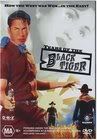
MOVIE REVIEW: Tears of the Black Tiger


Tears of the Black Tiger, a Thai film made in 2001 and now only released in the U.S., is a studied compendium of genre. There’s melodrama on par with The Girl of the Golden West and Oklahoma; stoic gunslingers who would not be out of place in 1950’s B-movie Westerns; gun violence worthy of Sergio Leone and Sam Peckinpah; and stylized violence, like bullets going through teeth or removing a skull, that echoes the post-Tarantino world of nonchalant death. From the painted techni-color of the landscapes to the angled close-ups of six-shooters firing to the wonderfully anachronistic use of bazookas, machine guns, and even cars (is this 1880’s or 1930’s Thailand? It’s never clear, and in the end it doesn’t matter) Tears of the Black Tiger works even when the back-story doesn’t quite jibe with the overall plot.

There is, of course, star-crossed lovers and unrequited love: Dum, the son of a peasant, and Rumpoey, the daughter of a local official, first meet as children. Later, after an unfortunate childhood incident involving an oar fight while out on a row, they meet at college. A year later they still pine for each other, although, she is engaged to a young captain of the local police and he is a member of a notorious gang and is known as the Black Tiger. Of course, the police captain must hunt down the gang.

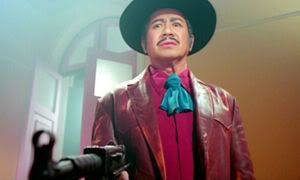
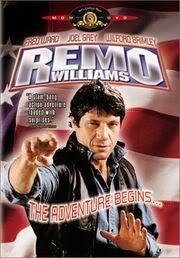
This all unfolds in settings rich with a full palette of blue and pink and golden hues. Rain also falls and lighting strikes at the appropriate moments where needed. The camera races in on Dum’s face to better collect his reaction to situations. Fai, the gang leader (played by Sombat Metanee, who must be Thailand’s version of Fred Ward) sows disharmony among his ranks by elevating Dum so quickly much to the chagrin Mahesuan who formerly enjoyed that privilege. The big battle scene between the police and the gang plays out like a cartoon. In fact, much of it is cartoonish: Mahesuan laughs with a deep villainous bellow and adorns his lip with a dastardly thin mustache and his body with garish cowboy attire.

All in all, Tears of the Black Tiger just doesn’t let up. It’s smart enough to know how to incorporate years and years of genre exercises without overplaying its hand and smart enough to also know how not to over-stylize it. It’s small when it needs to be as when it fleshes out the love story of Dum and Rumpoey. It’s over the top when it needs to be as when it intrudes on that story. Most importantly, despite the inconsistencies throughout, it’s simply grand fun to watch.